
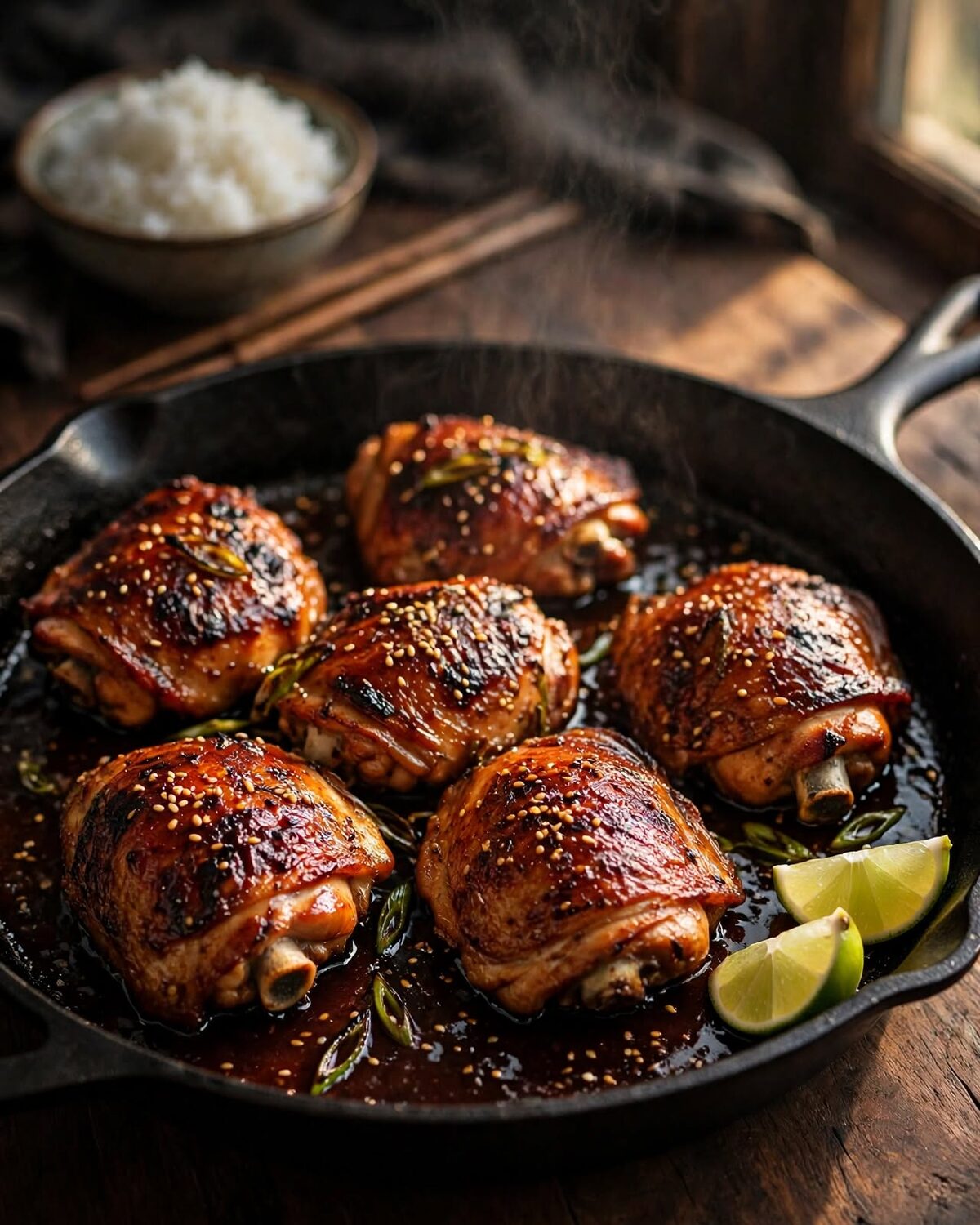
Weeknight chicken usually lands in one of two camps. Either it is breaded and forgettable, or it is a forty minute bake that ends up steaming in its own juices. Gochujang honey butter chicken is the third option: skin that crackles, a glaze thick enough to coat the back of a spoon, and one skillet to wash at the end of it.
The method is the part worth learning. Bone in, skin on thighs get a dry salt brine, then start skin side down in a cold pan so the fat renders slowly and the skin fries in its own butter. A glaze of gochujang, honey, soy sauce, garlic and rice vinegar goes on in two coats, once in the pan and once under the broiler, and a knob of cold butter whisked in off the heat turns the sticky pan juices into a proper sauce. Thirty five minutes total, ten of them chopping.
What keeps gochujang honey butter chicken in my rotation is balance. Gochujang is fermented, so a single spoonful brings salt, sweetness and a low patient heat instead of the flat burn of a hot sauce. Honey softens the edges, butter keeps the whole thing rich rather than sharp, and because the chicken cooks on the bone there is a wide window before it dries out. That window matters on a Tuesday, when dinner is competing with homework.
Crispy Skin Comes From a Dry Brine, Not From High Heat
The biggest upgrade to gochujang honey butter chicken happens before the pan is even on the stove. Salt the thighs all over with kosher salt, set them on a rack over a plate, and leave them uncovered in the fridge. Thirty minutes is enough. Two hours is better. Overnight is best.
Salt pulls moisture to the surface, dissolves, and gets drawn back into the meat, which seasons the thigh from the inside and leaves the skin drier than it started. Dry skin browns fast. Wet skin steams, sticks and tears. If you take one habit from this recipe, take that one.
Starting from frozen chicken is fine, but thaw it completely and then pat it very dry with paper towels. Any water left on the surface will spit in the pan and slow the browning down.
Cold Pan, Skin Down: The Rendering Step
Most chicken thigh recipes tell you to get the pan screaming hot first. That works for a bare breast and it fails for a skin on thigh, because the skin scorches before the fat underneath has rendered. For gochujang honey butter chicken the order is reversed. Place the thighs skin side down in a cold, dry cast iron skillet, then set it over medium heat.
Over the next ten to twelve minutes the fat renders out from under the skin and fries it from below. You will hear it start quiet and get louder. Do not move the chicken. Once the skin releases on its own and reads deep gold, it is ready to flip. If it still sticks, it is not done yet.
The deep gold colour is the Maillard reaction, the same browning that builds a crust on a steak, and it only starts once the surface is dry and the pan is above roughly 300 F. Food scientists at NC State explain the chemistry in plain language if you want the longer version.
Pour off all but about a tablespoon of the rendered fat and save the rest. That fat is one of the best things this recipe produces, and a spoonful of it in roasted potatoes or greens is not a small thing.
Building the Gochujang Honey Butter Glaze
The glaze is where the recipe earns its name. Whisk gochujang, honey, soy sauce, rice vinegar, grated garlic and a teaspoon of toasted sesame oil in a small bowl. Taste it raw. It should be hot at the back, sweet at the front, and a little sharp at the end from the vinegar.
Two adjustments fix almost any batch. Too hot, add another teaspoon of honey. Too sweet, add a splash more vinegar rather than more salt. The glaze thickens as it cooks, so keep it slightly looser than you want the finished sauce to be.
The butter does not go into the glaze. Cold cubed butter is whisked into the skillet at the very end, off the heat, after the pan has stopped sizzling. That is the step that separates gochujang honey butter chicken from plain sticky chicken. Butter emulsifies the honey and the rendered juices into a sauce with body instead of a syrup that slides off the plate.
Three Mistakes That Ruin the Glaze
The first is boiling the honey. Once the glaze goes on, the chicken spends its remaining time in the oven or under the broiler, and that is all the cooking the sugars need. A glaze that simmers on the stove for five minutes turns bitter and grainy.
The second is glazing both sides. The skin is the only surface that needs the lacquer, and coating the underside makes the pan juices sweet and muddy. Keep the glaze on top.
The third is skipping the rest. Cut into gochujang honey butter chicken straight from the oven and the juices end up on the cutting board instead of in the meat. Five minutes on a warm plate costs nothing and pays for itself.
Charred Scallion Oil, Two Minutes, Big Difference
While the chicken rests, char a bunch of scallions in the same skillet, about thirty seconds a side, until they blister and soften. Chop them, put them in a heatproof bowl, add a pinch of salt, and pour over three tablespoons of warm neutral oil. That is the whole thing.
The scallion oil cuts the sweetness of the glaze, so a plate of gochujang honey butter chicken with a spoon of it on top tastes brighter than the same plate without it. It also keeps for a week in the fridge and improves rice, eggs and noodles.
How Long Gochujang Honey Butter Chicken Takes to Cook
Rendering the skin takes about twelve minutes on the stove. The oven, set to 425 F, finishes the thighs in another twelve to fifteen, until the thickest part reads 175 F on an instant read thermometer. That is above the 165 F minimum the USDA publishes for poultry, and for dark meat it is the right target, since thighs hold connective tissue that needs the extra heat to turn soft.
The broiler does the last two to three minutes. Brush the remaining glaze on, put the skillet under the broiler, and stand there. Honey and gochujang go from lacquered to burnt in under ninety seconds. Pull the pan when the surface bubbles and the edges darken, not a moment later.
Rest the chicken five minutes before serving, then whisk that cold butter into the pan juices, taste, and add a squeeze of lime if the glaze reads too sweet.
Why Gochujang Works Better Than Hot Sauce Here
Hot sauce is mostly vinegar, chili and salt. It brings heat and acid and little else, which is why it needs help from sugar to glaze anything. Gochujang is a fermented paste of chilies, rice and soybeans, so it already contains the sweetness, the salt and the deep savory base that a glaze is trying to build.
That is also why gochujang honey butter chicken takes less than ten minutes of active work. The paste does the seasoning, the honey does the shine, and the butter does the texture. There is nothing left for a long ingredient list to fix.
What to Serve With Gochujang Honey Butter Chicken Thighs
If you want a second one pan chicken in the same week, the maple dijon chicken thighs with roasted grapes use the same skillet method with a sweeter glaze, and the apple cider chicken thighs are the fall version of it.
Steamed rice is the obvious answer and a good one, because the sauce is built to be spooned over something plain. Coconut rice, garlic rice or a bowl of warm noodles all work. If you want vegetables on the plate, char broccoli or bok choy in the same skillet after the chicken comes out, using the fat that is already in the pan.
Something cool on the side helps. Sliced cucumber with rice vinegar and a pinch of salt takes two minutes and resets the palate between bites, and a squeeze of lime over the top does the same job. Pickled onions work if you already have a jar in the fridge.
How to Store and Reheat Gochujang Honey Butter Chicken
Leftover gochujang honey butter chicken keeps three to four days in the fridge in a sealed container, and the sauce sets into a sticky glaze that loosens again when reheated. Warm it covered at 350 F for ten minutes, or in a skillet with a splash of water and a lid. The microwave works but softens the skin.
Do not freeze the glazed thighs if you care about texture. The sauce separates and the skin goes flabby on thawing. If you want a freezer version, freeze the raw salted thighs and make the glaze fresh on the day.
Questions About Gochujang Honey Butter Chicken
How spicy is gochujang honey butter chicken
Mildly to moderately spicy, depending on the brand. Gochujang sits between 1,500 and 10,000 Scoville units, and the honey and butter round off the top of that heat. If you are feeding children, start with two tablespoons of gochujang and add a third only if you want more burn. Do not swap in sriracha one for one, because it is thinner, saltier and much sharper.
Can I use boneless chicken breasts instead of thighs
You can, with two changes. Skip the cold pan render, since a skinless breast has no fat to render, and sear it in a hot oiled skillet instead. Cut the oven time to eight or twelve minutes and pull it at 160 F, then rest it. The glaze and the cold butter finish stay exactly the same.
Is gochujang gluten free
Usually not. Most traditional gochujang contains wheat or barley, and soy sauce brings its own wheat with it. For a gluten free version, buy a gochujang labeled gluten free and use tamari in place of soy sauce. Check both labels rather than assuming.
Can I make the glaze ahead of time
Yes, and it keeps five days in a sealed jar in the fridge. Whisk it again before using, because the honey settles at the bottom. Make a double batch and use the extra on salmon, roasted cauliflower or sticky pomegranate chicken wings. The butter should always be added fresh at the end of cooking, never mixed into the stored glaze.