
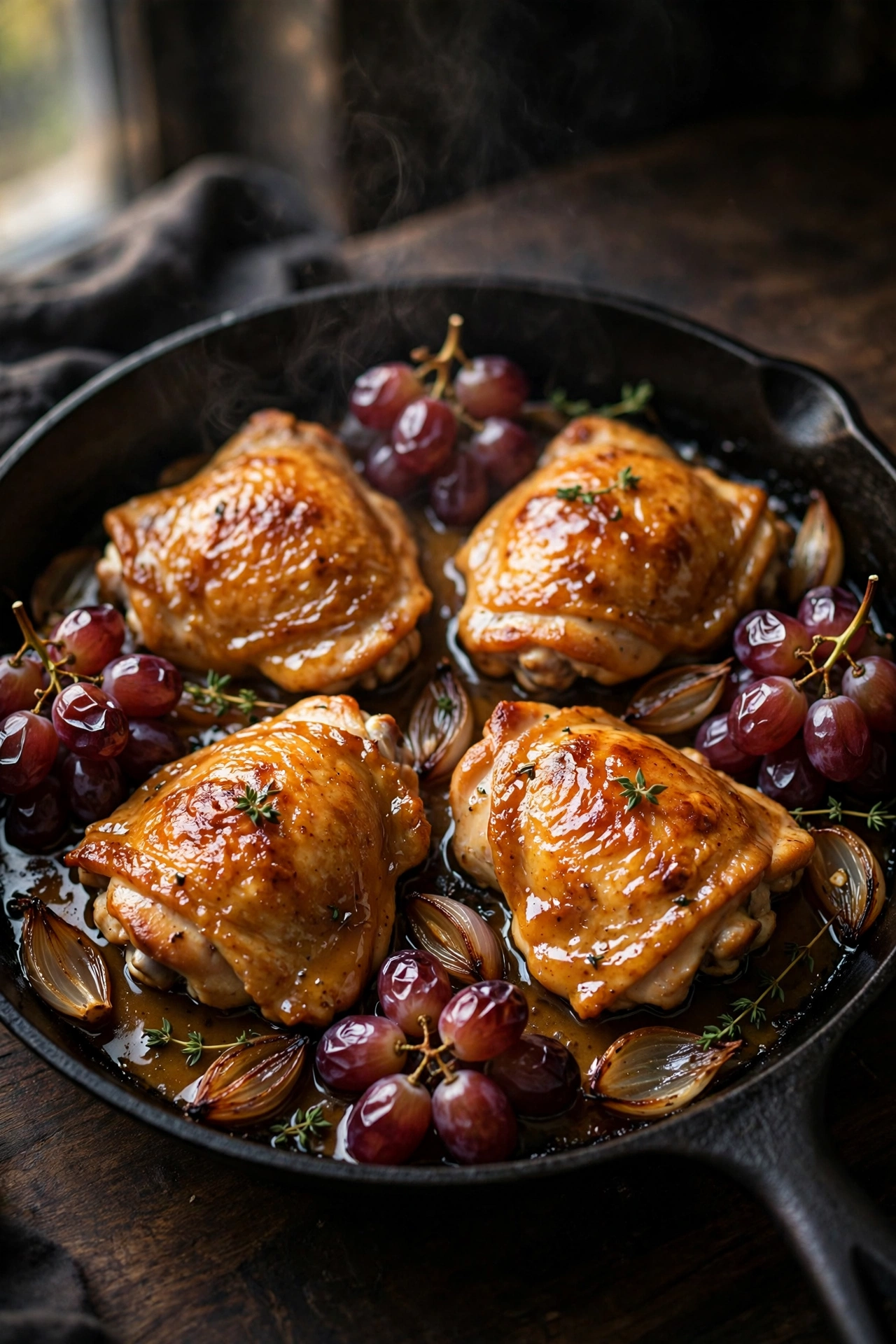
Most chicken dinners lose their edge because the sauce is an afterthought, poured over at the end. This one is built the other way around. The chicken renders its fat into a screaming hot skillet, those pan drippings become the whole sauce, and a handful of red grapes goes in to blister and turn jammy in the same pan. The result is maple dijon chicken thighs with a glossy, tangy-sweet glaze that coats every piece, and a skillet you can carry straight to the table.
It takes about 35 minutes and one pan. Bone-in skin-on thighs are the cut to use here because the skin protects the meat while it caramelizes, and the bones give the sauce body. Grapes sound like an odd addition until you taste what happens to them: roasted until they collapse, they release a jammy sweetness that cuts the mustard and makes the sauce taste like it cooked for hours. That is the whole trick behind these maple dijon chicken thighs.
Why Maple Dijon Chicken Thighs Work in One Pan
Start with a dry bird. Pat the skin thoroughly with paper towels, then season it well and let it sit while the skillet heats. Moisture is the enemy of crisp skin, and a wet thigh will steam instead of sear. Place them skin side down in a hot pan and do not move them for six or seven minutes. The skin releases on its own when the fat has rendered, and that rendered fat is what you will build the sauce on.
The glaze is nothing more than dark maple syrup, Dijon mustard, a splash of cider vinegar and a little stock. The vinegar is not optional. Without acid the maple turns cloying and the mustard disappears, so taste the sauce before it goes in and adjust. Pour it into the hot pan after the chicken comes out, scrape up every brown bit, and let it reduce until it coats the back of a spoon.
The Roasted Grapes Are the Point
Red seedless grapes go into the same skillet with the shallots and thyme while the chicken finishes in the oven. They blister, split and soften into little pockets of sweet acidity that make the maple dijon chicken thighs taste far more complex than the effort suggests. Do not skip the stems entirely: small clusters look beautiful on the plate and roast evenly.
Chicken needs to reach a safe internal temperature before it leaves the oven. According to the Michigan State University Extension food safety guide, poultry should hit 165°F (74°C) measured in the thickest part away from bone. Thighs are forgiving and stay juicy up to 180°F, so I pull mine around 175°F and let them rest five minutes before serving.
Two things make these maple dijon chicken thighs weeknight friendly: the whole thing happens in one skillet, and the sauce builds itself from the drippings. If you have never cooked maple dijon chicken thighs before, start here and adjust the vinegar at the end to taste.
What to Serve With This Skillet
Crusty bread is not a side, it is a requirement, because the pan sauce deserves to be mopped up. Beyond that, keep it simple: buttered orzo, mashed potatoes, or a pile of roasted carrots slid into the oven on a second tray. A sharply dressed arugula salad with lemon balances the sweetness of the maple dijon chicken thighs nicely, and a spoon of whole grain mustard on the table lets people push the mustard flavor further.
Leftovers and Reheating
Store the chicken and grapes together in a sealed container for up to four days. Reheat gently, covered, at 325°F so the skin does not burn, or shred the meat into the sauce and warm it on the stovetop. Leftover sauce thickens in the fridge, so loosen it with a spoon of stock or water before you reheat. The grapes soften further but the flavor deepens, which makes day two maple dijon chicken thighs almost better than the first night.
More Cozy Chicken Dinners
If you like one-pan cooking with a sticky glaze, my cranberry brie bites make the perfect starter before this skillet, and the apple cider chicken thighs use the same sear-and-glaze method with a different autumn twist.
Frequently Asked Questions
Can I use boneless chicken thighs instead of bone-in?
Yes, use the same weight of boneless skinless thighs and cut the oven time to 10 to 12 minutes. Sear them the same way, but expect a little less richness in the pan sauce because there is no bone to give it body.
What can I use instead of grapes?
Halved figs, pitted cherries or thick apple wedges all roast the same way and give you the same sweet-tart contrast. If you use apple, add it 5 minutes earlier so it softens fully.
Can I make maple dijon chicken thighs ahead of time?
Yes. Sear the chicken and make the sauce up to two days ahead, keep them separate in the fridge, then reheat covered at 325 degrees F for 15 minutes and spoon the warmed sauce over the top.
How do I keep the maple glaze from burning?
Maple syrup burns fast above 425 degrees F. Keep the oven at 425 or lower, spoon the glaze on rather than pouring it over a hot flame, and whisk in cold butter off the heat at the very end.