
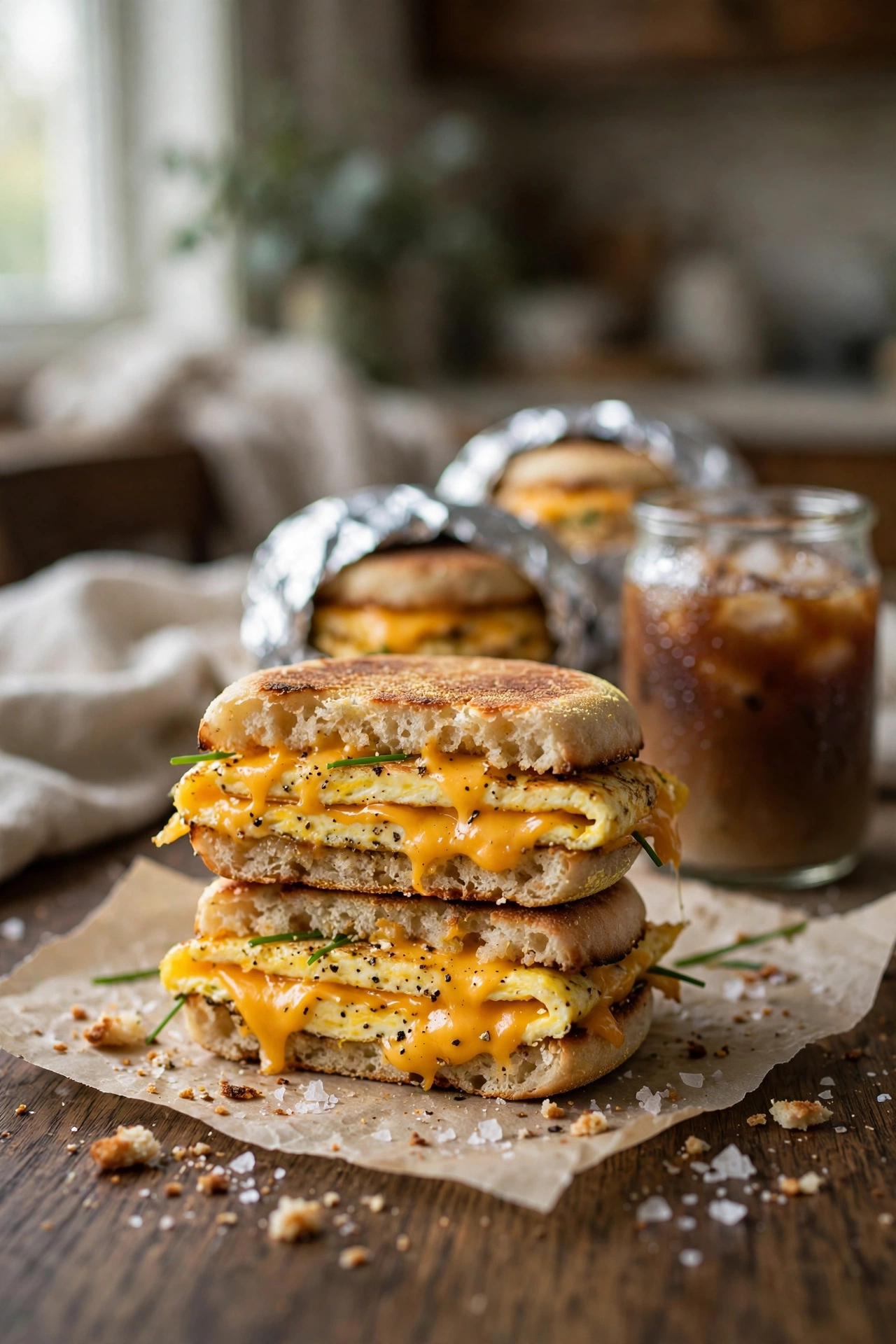
These meal prep egg recipes answer the one breakfast problem no recipe usually solves: nobody wants to cook at 6:40 in the morning. Instead you batch six freezer egg sandwiches in half an hour, wrap them, freeze them, and reheat one in ninety seconds on a weekday. The egg is the part that matters. A fried egg weeps water in the microwave and turns the bread into sponge, so these meal prep egg recipes bake the eggs as thin folded patties, which reheat clean and stay tender instead of rubbery.
Below is the whole method behind these meal prep egg recipes: the exact egg to milk ratio, the assembly order that keeps the muffin from going soggy, the wrapping that blocks freezer burn, and the reheating sequence that brings the edge back. Every number here comes from testing the same batch five different ways, so you can skip the failures and go straight to six breakfasts that hold for two months in the freezer.
Why These Meal Prep Egg Recipes Beat Morning Cooking
Cost is the first reason. Six sandwiches use a dozen eggs, six English muffins, six slices of cheddar, and a handful of add-ins, which lands near a dollar fifty per breakfast instead of the six or seven dollars a drive-through charges for something with half the protein.
Time is the second reason. One forty minute session on Sunday replaces six separate morning cooking sessions, and the cleanup happens once. That is the real argument for meal prep egg recipes: you are not saving ten minutes a day, you are removing a decision and a dirty pan from every weekday.
Texture is the third reason these meal prep egg recipes win, and it is where most freezer sandwiches fail. Bread freezes well, cheese freezes well, and baked egg freezes well, but only if all three are cooled before they meet. Stack a warm egg on a muffin and you have already started the sogginess that shows up three weeks later.
Ingredients for Meal Prep Egg Recipes (and Simple Swaps)
For six sandwiches you need twelve large eggs, a quarter cup of milk, half a teaspoon of salt, a quarter teaspoon of black pepper, six English muffins, six slices of sharp cheddar, two tablespoons of butter for toasting, and about a cup of add-ins such as cooked crumbled sausage, chopped spinach, roasted red pepper, or caramelized onion.
The milk in these meal prep egg recipes is not decoration, and it is not optional. A quarter cup per dozen eggs keeps the patties tender and gives you a little steam inside the oven, which is what stops the edges from turning leathery. Skip it and the egg sets hard; use more than a third of a cup and the patty turns custardy and weeps on reheating.
Sharp cheddar beats mild in meal prep egg recipes because freezing mutes flavor. Anything aged, smoked, or salty reads better after six weeks in the freezer than a soft mild cheese does. If you want a cheese that melts rather than stretches, use American or a young gruyere and add a pinch of salt to the eggs.
Bread matters more in meal prep egg recipes than people expect. English muffins and sturdy buns work; soft sandwich bread and brioche do not. Toast every split half lightly before assembly, because a toasted surface is a water barrier and that single step is the difference between a sandwich that reheats well and one that collapses.
Step One: Bake the Egg Patties Instead of Frying Them
To start these meal prep egg recipes, heat the oven to 350F (175C) and line a rimmed sheet pan with parchment, then brush the parchment with butter or spray it well. Whisk the eggs with the milk, salt, and pepper for a full thirty seconds, until the whites and yolks are completely combined and slightly frothy. Streaks of unwhisked white turn into rubber bands in the oven.
Pour the mixture onto the sheet pan and tilt it so the egg spreads into one even layer about a quarter inch thick. Scatter your add-ins over the surface rather than stirring them in, because they sink and cluster otherwise. Bake for twelve to fourteen minutes, until the center is just set and no longer jiggles when you nudge the pan.
Cool the sheet pan on a rack for ten minutes, then cut the egg into six rectangles with a bench scraper or a knife. You want each piece slightly smaller than your muffin so the egg does not overhang and burn at the edges during reheating. This is the step that makes meal prep egg recipes practical, because a sheet pan of egg is faster and more even than six small pans on the stove.
Step Two: Toast, Cheese, and the Assembly Order
For the assembly stage of these meal prep egg recipes, split the muffins and toast the cut sides until they are dry and lightly golden, either in the oven on a second rack or in a toaster. Let them cool completely, then lay a slice of cheddar on the bottom half, add the egg rectangle, and top with the second half. Cheese goes under the egg, not over it, so it melts against the hot egg and seals the bread from the moisture above.
If you are adding a sauce, keep it out of the freezer. Mayonnaise, hot honey, and ketchup all separate and bleed into the bread. Freeze the sandwich plain and add the sauce after reheating, which takes three seconds and saves the texture.
Step Three: Wrapping and Freezing Without Freezer Burn
Wrap each sandwich from your batch of meal prep egg recipes tightly in foil, then place the wrapped sandwiches in a freezer bag with as much air pressed out as you can manage. Foil alone blocks light and air but not moisture loss at the seams, so the bag is doing real work. Label the bag with the date and the filling, because six identical foil packets become a guessing game by week two.
Freeze them flat on a sheet pan for an hour before stacking them in the bag. This flash freeze keeps the sandwiches from crushing each other and keeps the muffin crumb intact. After that initial hour they can be stacked or filed upright like books, whichever fits your freezer better.
How to Reheat Meal Prep Egg Recipes So Nothing Steams
Unwrap the sandwich completely before reheating, which is the rule that saves most meal prep egg recipes. Foil in a microwave sparks, and plastic wrap traps the steam that ruins the bread. Place the sandwich on a paper towel on a microwave safe plate and heat on fifty percent power for ninety seconds, then flip it and finish on high for thirty to forty five seconds.
Half power for the first stretch is the whole trick. Full power heats the egg faster than the bread, so the egg overcooks while the center of the muffin is still cold. Lower power lets the heat travel evenly and the egg stays soft.
Reheating meal prep egg recipes from frozen adds a minute, while one thawed overnight in the fridge needs only sixty seconds in the first stretch. If you want a crisp edge back, finish the sandwich in a toaster oven at 375F (190C) for four minutes instead of the second microwave stretch, open faced so the egg surface dries slightly.
The Forty Minute Sunday Timeline
Minutes zero to five: oven on, pan lined, eggs cracked and whisked. Minutes five to twenty: egg bakes while you split and toast the muffins and cook any sausage or vegetables you are adding. Minutes twenty to thirty: egg cools, then gets cut and assembled into six sandwiches. Minutes thirty to forty: wrap, bag, label, and freeze flat.
That is the entire session for a batch of meal prep egg recipes, and it fits inside one podcast episode. If you double the batch, the only step that takes meaningfully longer is wrapping, which means twelve breakfasts cost you about fifty minutes of actual work.
Five Variations on the Same Base
Sausage and pepper: crumble cooked breakfast sausage over the egg before baking for a heartier version of these meal prep egg recipes and add roasted red pepper. Bacon cheddar: lay two half strips of cooked bacon on each sandwich at assembly, never inside the egg, so the bacon stays crisp. Spinach and feta: wilt a cup of spinach, squeeze it dry, and scatter it with crumbled feta, which freezes better than most soft cheeses.
Southwest: black beans, diced green chile, and pepper jack, with salsa added only after reheating. Mushroom and gruyere: saute the mushrooms until their water is gone, because wet mushrooms are the fastest route to a soggy sandwich. All five are the same method, which is the point of building a rotation around one reliable base of meal prep egg recipes.
Storage Limits and Food Safety for Egg Sandwiches
Health Canada’s egg safety guidance is the reference to follow here: eggs and egg based foods should reach an internal temperature of at least 74C (165F), and cooked leftovers should be refrigerated within two hours of cooking and eaten within three to four days, or frozen for later use. A baked egg patty comes out of a 350F oven well past that mark, so the bake itself is safe by design.
Anything left at room temperature for more than two hours should be thrown out rather than argued with, and that includes the assembled sandwiches sitting on the counter while you wrap them. Cool them, then wrap them promptly.
In the freezer, keep the bag at the back where the temperature is steadiest. In the fridge, a thawed sandwich is a cooked egg product, so treat it like any leftover and eat it within three to four days. Do not thaw on the counter overnight; move one sandwich to the fridge the night before, or reheat straight from frozen.
What One Sandwich Delivers: Protein and Calories
Each sandwich from these meal prep egg recipes lands around 380 calories with roughly 22 grams of protein, 28 grams of carbohydrate, and 19 grams of fat, depending on the cheese and add-ins you choose. That is a real breakfast rather than a pastry and coffee, and it comes from eggs, which the Better Health Channel describes as a high quality protein alongside dairy and meat because they carry all of the essential amino acids.
Two things are worth being honest about. Protein needs vary by body weight, age, and activity, so 22 grams is a useful contribution rather than a target, and the same source notes that the body cannot store protein and excretes any excess, which is a reason to spread it across meals instead of loading one. These sandwiches are not a high protein recipe in the marketing sense, and they do not need to be.
Sodium is the number to watch in meal prep egg recipes. Cheese and cured meat stack up fast, so if you are tracking it, use a lower sodium cheese, skip the sausage, and season the eggs with pepper and a little smoked paprika instead of extra salt.
Common Mistakes That Ruin Meal Prep Egg Recipes
Assembling while the egg is warm is the first mistake, and it causes more soggy sandwiches than anything else. The second is wrapping in plastic only, which lets air in and freezer burn out. The third is reheating on full power for three minutes, which turns the egg to foam.
Two quieter ones: forgetting to toast the bread, and adding wet vegetables straight from the pan. Both fail in the same way, by putting water where the bread is. A paper towel under the sandwich in the microwave absorbs the condensation that would otherwise soak the bottom half, which is a small step worth keeping.
What to Serve With Them
Keep the sides for these meal prep egg recipes as fast as the sandwich. A handful of cherry tomatoes, a small bowl of Greek yogurt with everything seasoning, or a piece of fruit covers the gap between a sandwich and a full plate. If you want something warm, a mug of the same milk you used in the eggs works better than juice.
For a bigger weekend version, serve the sandwich open faced with sliced avocado and a squeeze of lime, which is the same recipe in a slower format. During the week, the whole appeal is that nothing else is required.
Final Notes Before You Freeze
Start these meal prep egg recipes with the plain base once, taste it, then add one variation per week. Six sandwiches is a comfortable first batch because it covers a work week with one spare, and the method scales to twelve without changing anything except the number of foil squares you cut.
Make the batch this Sunday and you have bought yourself six calm mornings, which is usually worth more than the money saved. That is the honest case for meal prep egg recipes: not perfection, just one less thing to think about before coffee.
Sources
Egg cooking temperatures, cooling, and leftover limits: Health Canada, Egg safety. Protein quality and daily needs: Better Health Channel, Protein. Internal reading: breakfast egg muffins recipes, high protein breakfast meal prep, overnight oats recipe cinnamon.