
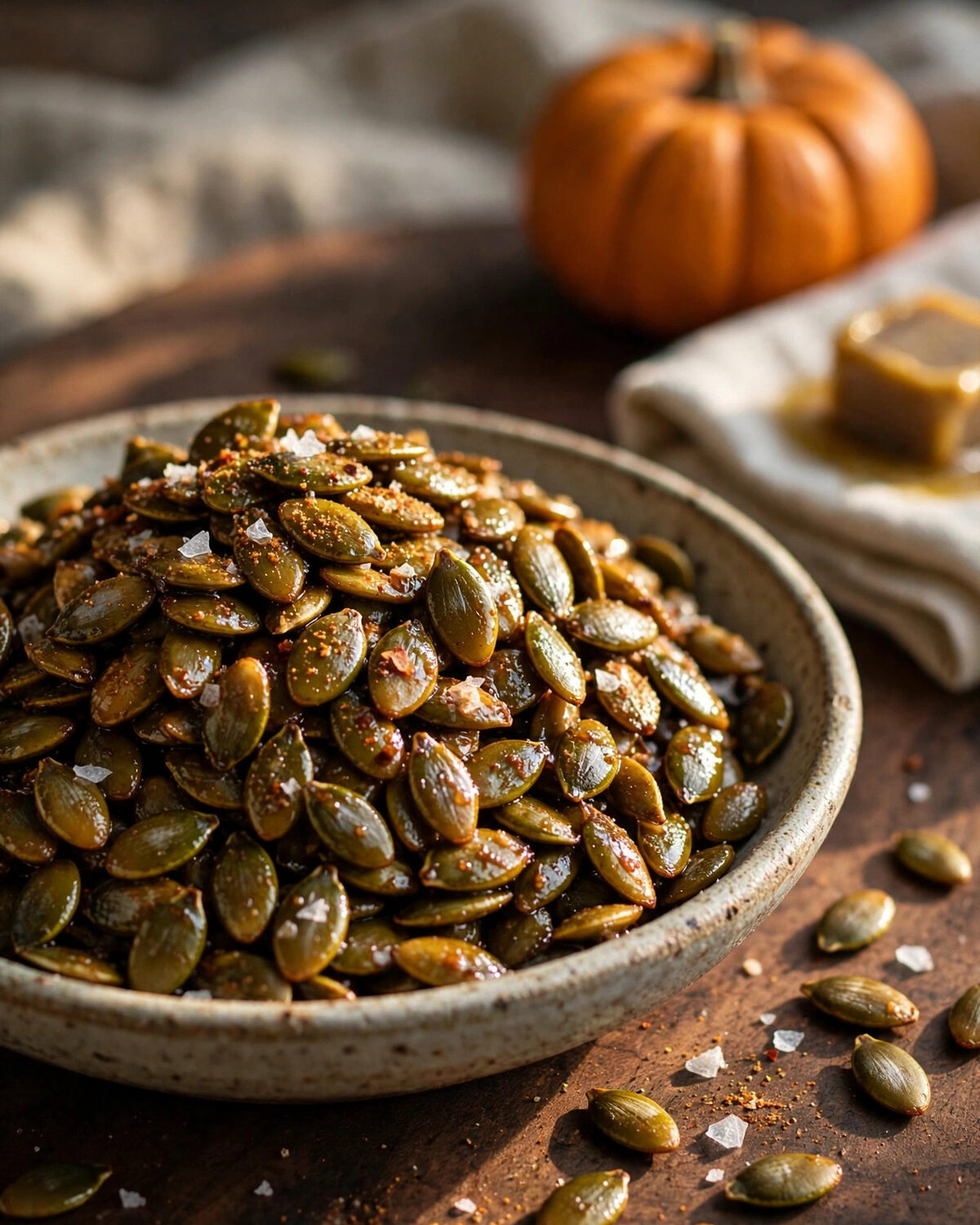
Every October there is a pile of roasted pumpkin seeds waiting to happen and most of them end up chewy, pale, and forgotten on the counter by November. This version fixes that with three small moves: a ten minute salted simmer, a real browning of the butter, and a maple glaze that goes on while the seeds are still hot enough to drink it in.
The seeds come out deep golden, crisp all the way through the hull, and seasoned like something you would pay for in a paper cone. The recipe uses the seeds from one carving pumpkin, takes about ten minutes of real work, and turns the messiest part of Halloween into the snack everyone keeps coming back for.
Why These Roasted Pumpkin Seeds Work
Most pumpkin seed recipes are one line long: rinse, toss with oil, bake at 350 degrees F, salt. That method works, sort of, but it produces seeds that are leathery in the middle and bitter at the tips, because a wet hull cannot crisp and a hot oven burns the outside before the inside dries out.
This recipe treats the seed like a small piece of meat. The simmer seasons the hull and softens it, the low oven dries it slowly into a shell, and the browned butter with maple and cayenne goes on at the right moment so it clings instead of pooling at the bottom of the bowl. It is the same set of steps a chef would use for any glazed nut, just applied to something you were about to throw away, and it is why these hold their crunch long after other roasted pumpkin seeds have gone soft.
The Salted Simmer Is the Whole Trick
Ten minutes in salted water is the difference between a seed you chew and a seed you crunch. Saltwater penetrates the hull, so the seasoning is built in rather than sitting on the surface where it rubs off on your fingers. The heat also relaxes the fibrous outer layer so it dries into something thin and snappy instead of tough.
Use about one tablespoon of fine salt for every four cups of water, bring it to a boil, add the cleaned seeds, and set a timer. This is the step that separates crisp roasted pumpkin seeds from the chewy ones. Do not walk away and do not go longer than twelve minutes, because overcooked seeds turn mushy and no amount of oven time will bring them back.
How to Clean and Dry Pumpkin Seeds
Start with the seeds from one medium carving pumpkin, which is roughly two cups once they are clean. Pull the big clumps out by hand and put the seeds straight into a bowl of cold water. Rub a handful at a time between your palms and the orange strings will slide off while the seeds sink to the bottom. Skim the floating bits off the top and repeat until the water runs clear.
Drying is the step people skip and it is the reason most batches fail. Spread the drained seeds on a clean kitchen towel, fold it over, and press hard, because dry seeds are the only way to roasted pumpkin seeds that snap. Then let them sit on a dry sheet pan for fifteen minutes while the oven heats. Any water left in the crease of a seed will steam and leave you with a soft center, and that single step decides whether your roasted pumpkin seeds crunch or chew.
Brown Butter, Maple, and a Pinch of Cayenne
Browned butter is the flavor backbone here. Melt three tablespoons over medium heat and keep swirling until the foam settles down and the milk solids at the bottom turn the color of hazelnut skin, which takes about four minutes. That is where the toasted, almost nutty note comes from, and it is why these seeds taste richer than anything made with plain oil.
The maple goes in off the heat, not in the pan, because maple syrup scorches fast above 350 degrees F. Toss the hot seeds with the brown butter first, roast them, and brush the maple on during the last few minutes so it turns into a thin glaze instead of a burnt film. Cayenne and flaky salt go on at the very end while the glaze is still tacky enough to hold them.
Spice Blends Worth Trying
Once the technique is set, the seasoning on your roasted pumpkin seeds is a blank page. A sweet version with cinnamon, nutmeg, and a little brown sugar tastes like pumpkin pie in seed form and disappears fastest at a party. A savory version with smoked paprika, garlic powder, and a squeeze of lime pairs well with a Halloween snack board and anything cold to drink.
For a holiday table, warm spices work better than heat, so try cumin and coriander with a pinch of cinnamon, or rosemary and black pepper for something more herbal. The University of Illinois Extension pumpkin guide makes the same point in its own recipe notes, roasting the seeds with a sweet blend on one tray and a spicy blend on another, and it is a genuinely useful page for anyone cooking a whole pumpkin from scratch.
What to Serve With Roasted Pumpkin Seeds
These roasted pumpkin seeds are a snack first, but they earn a place on a table too. Scatter them over roasted butternut squash soup for texture, or over a salad in place of croutons. They add crunch to chocolate dirt cups if you chop them coarsely, and they belong on the same platter as mummy sausage bites when the whole spread is orange and black.
For drinks, something tart cuts the butter best, which is why a glass of cranberry orange punch works so well next to a bowl of these. Set them out in a small bowl with a paper cone or a spoon, because people will eat them by the handful.
How to Store Them So They Stay Crisp
Cool the roasted pumpkin seeds completely on the sheet pan before they go anywhere near a container. Trapped warmth turns the glaze steamy and the seeds go soft within an hour. Once cool, a glass jar with a tight lid keeps them crisp for about two weeks at room temperature.
For longer storage, keep the jar in the refrigerator for up to two months or freeze them for three and refresh in a 300 degree F oven for five minutes before serving. If a batch does go soft, that same five minute re-crisp brings roasted pumpkin seeds back to life like a reset button.
Are Roasted Pumpkin Seeds Good for You
Roasted pumpkin seeds are a real food, not a diet food, and the portions add up quickly. One ounce of hull-on roasted seeds lands around 150 calories with roughly seven grams of protein, along with magnesium, iron, zinc, and a decent dose of fiber. Pumpkin itself earns its reputation too: the University of Illinois Extension notes that one cup of cooked pumpkin has about 49 calories, 564 milligrams of potassium, and a serious amount of vitamin A.
Because the seeds are calorie dense, a quarter cup is a sensible serving next to a piece of fruit rather than an entire bowl. The butter and maple add fat and sugar, so if you are watching intake, cut the butter to two tablespoons and skip the maple in favor of the savory spice blend.
Frequently Asked Questions
Do you have to rinse pumpkin seeds before roasting?
Yes. Pumpkin seeds come out of the cavity coated in wet pulp and stringy fibers, and that pulp burns into bitter black flecks in the oven. Drop the seeds in a bowl of cold water, rub them between your fingers so the strings slip away, and the good seeds float while the pulp sinks. Rinse twice, then move on to the simmer.
How do you make roasted pumpkin seeds crispy instead of chewy?
Three things matter more than the spice mix. Simmer the seeds in salted water for ten minutes, which softens the outer hull so it can dry into a crisp shell. Dry them completely, first in a towel and then on a sheet pan, because any water left on the surface steams the seeds instead of roasting them. Finally, roast low at 300 degrees F in a single layer and stir every fifteen minutes so the ones near the edge do not scorch.
Can you eat pumpkin seeds with the shell on?
Yes. The whole hull-on seed is edible and it is how most people roast the seeds from a carving pumpkin. What you buy in a bag as pepitas are hull-less seeds from a different pumpkin variety grown for seed production. Hull-on seeds are chewier and more rustic, pepitas are greener and more tender, and this recipe works with either one, though the simmer step matters most for hull-on seeds.
How long do roasted pumpkin seeds stay fresh?
Cool them completely first, then store them in a glass jar with a tight lid. They hold their crunch for about two weeks at room temperature, two months in the refrigerator, and up to three months in the freezer. If they start to smell like old oil or taste soft in the middle, they have turned and should be thrown out.
Can you make this recipe dairy free or vegan?
Yes. Swap the browned butter for three tablespoons of olive oil or melted coconut oil and add a quarter teaspoon of flaky salt to the toss. Browned butter is the flavor engine here, so if you skip it, lean harder on the maple, cayenne, and salt so the seeds still taste seasoned rather than plain.