
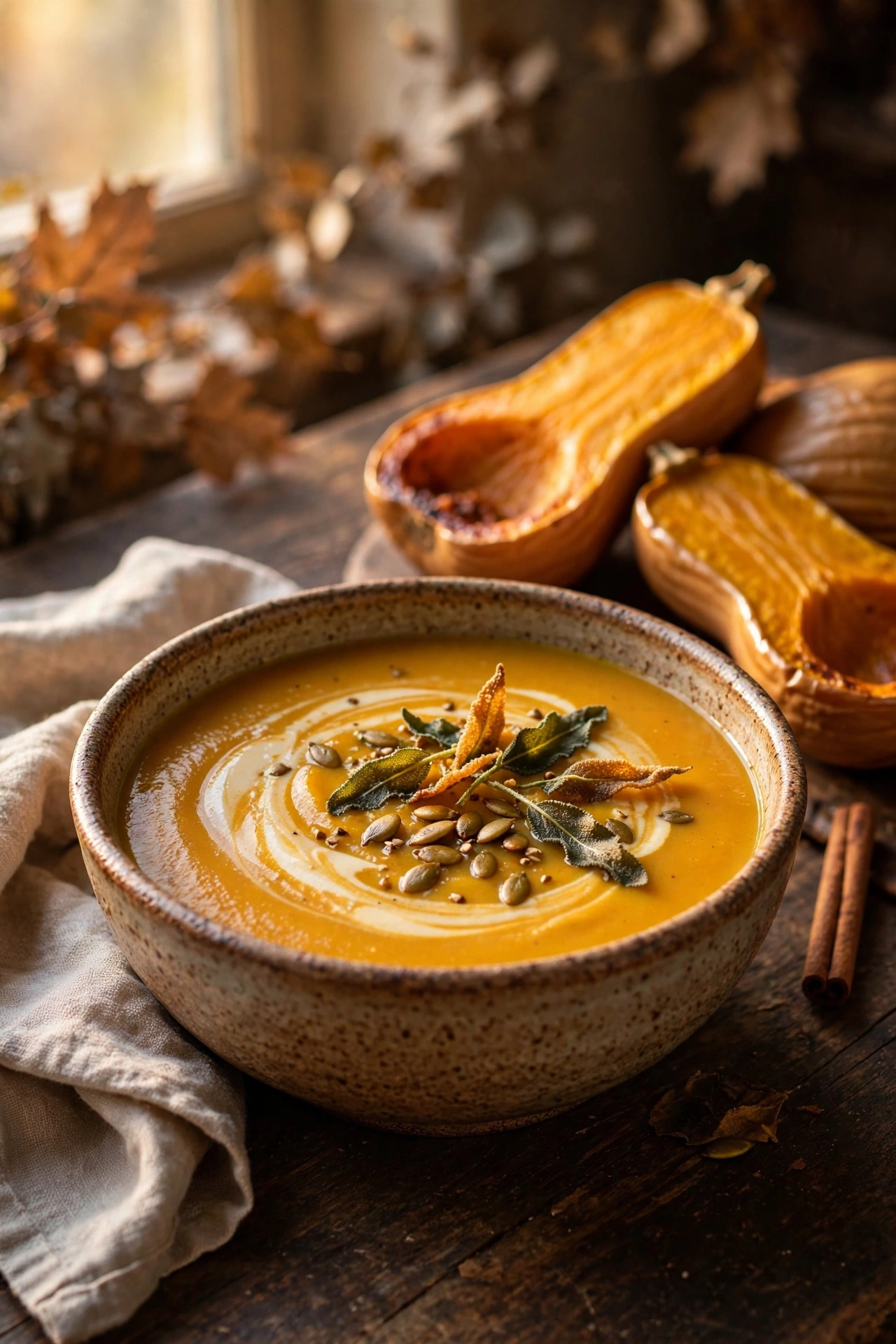
There is a moment in early fall when the kitchen smells like butter turning nutty and something sweet simmering on the stove, and this roasted butternut squash soup is exactly that moment in a bowl. The squash roasts until the edges caramelize, then it blends into something so silky you would swear there was cream in every spoonful. There is not much cream at all.
The trick behind this roasted butternut squash soup is the brown butter. You melt butter with fresh sage until the milk solids turn the color of hazelnuts, then you use that same butter twice: once to build the soup and once, cold, to finish it. Apple cider goes in instead of part of the broth, so the sweetness is fruity rather than sugary. A pinch of cayenne keeps the whole thing from tasting flat.
Why This Roasted Butternut Squash Soup Works So Well
Roasting, not boiling, is the whole game with roasted butternut squash soup, and it is the one step that changes the result most. Boiled squash takes on water and tastes thin. Roasted squash concentrates its sugars, and the cut faces pick up color that later reads as depth in the soup. You roast it cut-side down on a hot sheet pan with the onions, carrots and garlic, so everything caramelizes at the same time and the blending happens in one go.
Then there is the finish. A cold cube of sage brown butter swirled in at the very end adds a glossy, nutty richness that no amount of cream can copy. It also makes the soup look restaurant-finished without any garnish skill.
Ingredients for the Best Roasted Butternut Squash Soup
One medium butternut squash, about three and a half pounds, is the backbone of this roasted butternut squash soup. Get one with a long, thick neck, because the neck is solid flesh and the seed cavity is small. Beyond that you need yellow onion, carrots, garlic, chicken or vegetable broth, apple cider, maple syrup, apple cider vinegar, fresh sage and cold butter.
The apple cider is the ingredient most people skip, and it is the one that makes this roasted butternut squash soup taste like October. Use cloudy, unfiltered cider, not apple juice. Unfiltered cider has more body and a little natural tartness that keeps the soup from tasting like dessert.
How to Make Roasted Butternut Squash Soup Step by Step
Heat the oven to 425°F. Split the squash lengthwise, scoop the seeds, rub the cut faces with olive oil and season with salt and pepper. Put it cut-side down on a lined sheet pan along with the onion wedges, carrots and peeled garlic cloves. Roast for about forty minutes, until a knife slides in with no resistance and the onion edges are dark.
While it roasts, make the sage brown butter. Melt three tablespoons of butter in a light-colored pan over medium heat, add the sage leaves and cook until the leaves are crisp and the butter smells nutty and is the color of amber. Pull the leaves out and save them for the top. Pour the butter into a small bowl and put it in the fridge so it firms up again.
When the tray comes out, scoop the squash flesh into a pot with the roasted vegetables. Pour in the broth, apple cider, maple syrup and cayenne, then simmer fifteen minutes. Blend completely smooth, stir in the vinegar off the heat, and taste for salt.
For a creamier body without extra cream, blend in a small peeled potato with the broth. For a brighter, more summery version, swap half the cider for dry white wine and add a strip of lemon zest while it simmers.
Make-Ahead and Storage
Like most soups, this roasted butternut squash soup is better on day two, which makes it a good candidate for a Sunday batch. Cool it fast in shallow containers no more than two inches deep, refrigerate it, and plan to eat it within three to four days, or freeze it for up to three months. The University of Nebraska-Lincoln food safety team recommends exactly that window for refrigerated soup, plus reheating to a full 165°F before serving again. See their soup safety guidance on UNL Food.
Keep the sage brown butter separately in the fridge and add it fresh to each portion, because the fried sage loses its crunch once it sits in liquid.
What to Serve With It
Serve this roasted butternut squash soup with a thick slice of grilled sourdough, a sharp cheddar grilled cheese, or a simple green salad with a mustard vinaigrette all work. If you want a heartier bowl, add shredded rotisserie chicken or browned crumbled sausage right before serving. A bowl of this plus bread is a complete fall dinner and it comes together in under an hour start to finish.
Tips for the Best Roasted Butternut Squash Soup Bowl
Do not skip the vinegar in this roasted butternut squash soup. It is the difference between flat and alive. Add it off the heat, a teaspoon at a time, and taste as you go. If the soup tastes sweet but dull, it needs acid. If it tastes sharp, it needs a pinch more salt and a little maple.
If you blend hot soup in a stand blender, fill it only halfway and vent the lid. An immersion blender in the pot is safer and faster for this recipe. And if the texture is thinner than you want, simmer it uncovered for ten minutes rather than adding thickener.
If you love cozy one-pot fall cooking, try our one-pot pumpkin alfredo pasta next, or keep the oven on for the creamy butternut squash rigatoni. For a lighter starter before this soup, the brown butter apple cider harvest salad uses the same cider and sage pairing.
Finish with texture. Crispy sage, toasted pepitas and a swirl of cold brown butter give you crunch, salt and aroma all at once, and that is what makes a humble squash soup feel like a restaurant bowl.
Frequently Asked Questions
Can I use frozen butternut squash instead of fresh? Yes, but roast it first. Spread the cubes on a sheet pan, toss with oil and salt, and roast at 425°F until the edges brown, about twenty-five minutes. Skipping that step is why frozen squash soup often tastes watery.
Can I make this roasted butternut squash soup vegan? Use olive oil or vegan butter for the sage butter, and swap the chicken broth for vegetable broth. Coconut oil works but changes the flavor, so a good plant butter is a better choice.
Why is my butternut squash soup bland? Usually it is under-seasoned and under-roasted. Squash needs more salt than you expect, and the cut surfaces need real color before they go in the pot. A teaspoon of vinegar and a pinch of cayenne at the end fixes most flat batches.
Can I freeze roasted butternut squash soup? Yes, for up to three months in airtight containers, leaving an inch of headspace. Thaw overnight in the fridge and reheat gently, then add the brown butter and sage fresh at serving so the finish stays bright.
Can I use frozen butternut squash instead of fresh?
Yes, but roast it first. Spread the cubes on a sheet pan, toss with oil and salt, and roast at 425F until the edges brown, about twenty-five minutes. Skipping that step is why frozen squash soup often tastes watery.
Can I make this roasted butternut squash soup vegan?
Use olive oil or vegan butter for the sage butter, and swap the chicken broth for vegetable broth. Coconut oil works but changes the flavor, so a good plant butter is a better choice.
Why is my roasted butternut squash soup bland?
Usually it is under-seasoned and under-roasted. Squash needs more salt than you expect, and the cut surfaces need real color before they go in the pot. A teaspoon of vinegar and a pinch of cayenne at the end fixes most flat batches.
Can I freeze this roasted butternut squash soup?
Yes, for up to three months in airtight containers, leaving an inch of headspace. Thaw overnight in the fridge and reheat gently, then add the brown butter and sage fresh at serving so the finish stays bright.