
Beginner chicken recipes fail for one boring reason. The pan is not hot enough, the breast is not an even thickness, and nobody owns a thermometer yet. This recipe fixes all three with two boneless breasts, one skillet, twenty five minutes, and a lemon garlic butter pan sauce built in the same pan while the chicken rests. No breading, no overnight brine, no special cuts, and nothing that needs a second hobby to pull off.
The method behind all of these beginner chicken recipes is a sequence, not a talent. Dry the surface, make the meat even, salt it early, sear it hard, pull it at 160F, and let it rest until it reaches 165F. Do that and a first time cook gets the same juicy result as someone who has been searing for twenty years. Skip any single step and you get the pale, rubbery, dry chicken breast that makes people say they do not like chicken.
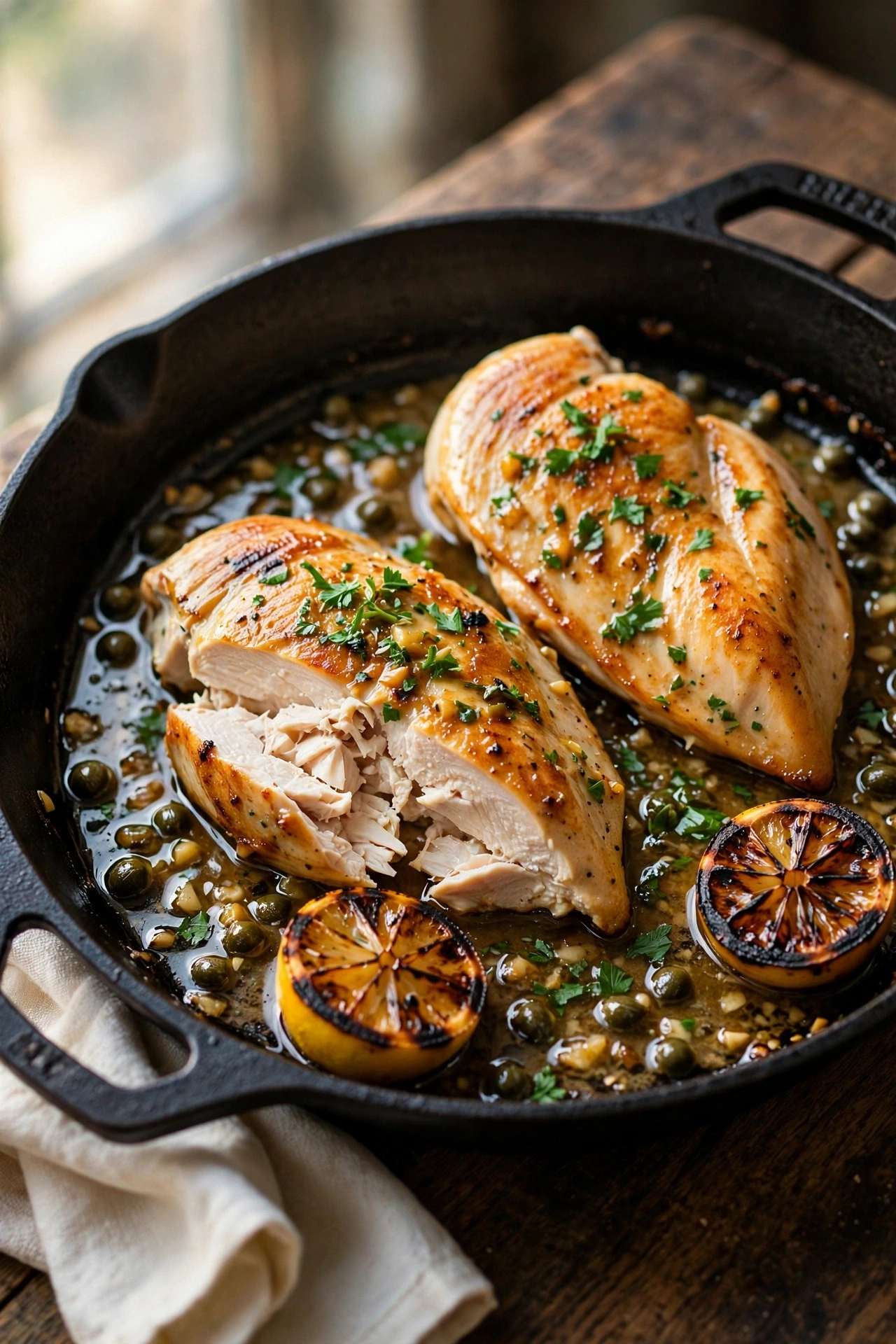
Why These Beginner Chicken Recipes Work
Four decisions do the heavy lifting. The chicken is pounded to an even three quarter inch, so the thin end cannot overcook before the thick end is safe. It is salted thirty minutes ahead, which seasons the meat and helps it hold water. The pan is properly preheated, so the surface browns instead of steaming. And it comes off the heat at 160F and finishes cooking while it rests. That last one is the whole difference between juicy and sawdust, and it costs nothing.
Notice what is missing from the list. No marinade overnight, no brine bucket, no butter under the skin, no oven finish. The best beginner chicken recipes are the ones with the fewest moving parts, because every extra step is one more place to lose track of time.
The Only Equipment You Need
- A heavy skillet. A ten or twelve inch cast iron or stainless pan holds heat when cold chicken lands in it. Nonstick works but will not brown as deeply.
- A meat thermometer. This is not optional for beginner chicken recipes. According to the USDA Food Safety and Inspection Service, appearance and color are not reliable indicators of safety or doneness, yet only about ten percent of home cooks use a thermometer on chicken breasts.
- Plastic wrap or a zip bag for pounding, plus a flat mallet, a rolling pin, or the bottom of a heavy pot.
- Tongs and a plate for resting.
That is the whole list. With a skillet and a thermometer you can cook every recipe in this beginner chicken recipes collection.
Ingredients for Beginner Chicken Recipes (Two Servings)
For the chicken
- 2 boneless, skinless chicken breasts, about 8 ounces (225 g) each
- 3/4 teaspoon fine sea salt
- 1/4 teaspoon freshly ground black pepper
- 1 tablespoon olive oil
For the lemon garlic butter pan sauce
- 2 tablespoons unsalted butter
- 3 garlic cloves, minced
- 1/4 cup low sodium chicken broth
- 2 tablespoons fresh lemon juice, about half a lemon
- 1 teaspoon lemon zest
- 1 tablespoon chopped fresh parsley
- 1/4 teaspoon red pepper flakes, optional
- 1 tablespoon capers, optional
Two breasts at eight ounces each is the right size for two person chicken recipes. If your store sells the giant twelve ounce breasts, buy one and slice it horizontally into two cutlets, then pound them. Do not cook a twelve ounce breast whole next to a six ounce one, because they will finish at different times and one of them will be dry.
Pick the Right Cut for Beginner Chicken Recipes
Boneless, skinless breasts are the hardest cut to cook well, which is exactly why they are the best teacher. They are lean, they have no fat to baste them from the inside, and they go from juicy to chalky in about ninety seconds. Master the breast and thighs, drumsticks and pork chops all become easy, because every one of them is more forgiving.
If you want an easier first attempt, buy boneless skinless thighs. They are cheaper, they stay juicy well past 175F, and they still work with the same sauce below. I keep breasts in these beginner chicken recipes because that is what most people already have in the fridge.
Step 1: Pound the Breasts to Even Thickness
Put one breast between two sheets of plastic wrap or inside a zip bag with the air pressed out, and hit it with the flat side of a mallet. Work from the center outward until the thickest part is about three quarters of an inch. Aim for the same thickness everywhere and stop before the meat starts to look shredded. A breast that is one and a half inches at one end and half an inch at the other cannot cook evenly, no matter how good the pan is.
This is the highest return step in all of beginner chicken recipes and it takes ninety seconds.
Step 2: Salt Early With a Thirty Minute Dry Brine
Season both sides with the salt and pepper, then leave the breasts on a plate at room temperature for thirty minutes. Salt pulls moisture to the surface, dissolves, and gets pulled back in, so the meat is seasoned through instead of just on the crust. That single half hour is what separates beginner chicken recipes that work from the ones that turn out dry. It also dries the surface, which is exactly what you need for browning.
Thirty minutes is the sweet spot. Ten minutes does very little, and an hour in the fridge is fine but then the chicken must sit out for fifteen minutes before it hits the pan, because cold meat drops the pan temperature and steams.
Step 3: Get the Pan Properly Hot
Set a heavy skillet over medium high heat for a full two minutes before anything goes in. Add the olive oil and wait until it shimmers and moves easily, about thirty seconds. A drop of water should sizzle and vanish, not sit and bubble slowly. That is the sight and the sound that beginner chicken recipes live or die on. A pan that is only warm cooks the outside to a pale grey while the middle stays raw, and that is the most common failure in beginner chicken recipes.
Keep the heat at medium high, not maximum. Olive oil starts to smoke around 400F, and burnt fat tastes bitter no matter how good the sauce is.
Step 4: Sear Without Moving It
Lay the breasts in the pan smooth side down, setting them away from you so the oil does not splash, and press each one flat for ten seconds with a spatula so the whole surface makes contact. Then leave them alone for five to six minutes. Moving chicken around a pan is the habit that prevents browning, because every time you lift it you restart the crust.
Listen for a steady, quiet sizzle, the sound these beginner chicken recipes depend on. A violent crackle means the pan is too hot, and near silence means it is too cold.
Step 5: Flip Once and Start Checking Temperature
Flip each breast once. They should release without sticking and show a deep golden brown. Cook another four to five minutes, then check the thickest part with the thermometer, going in from the side so the probe does not touch the pan. The safe minimum internal temperature for all poultry is 165F, and the reliable way to hit it without overshooting is to pull the chicken at 160F and let carryover heat finish the job.
Insert the probe into the thickest part and keep it away from bone, fat and gristle, because those read differently from the meat itself.
Step 6: Rest Five Minutes and Do Not Skip It
Move the breasts to a plate, tent loosely with foil, and wait five minutes. The outside of the meat is hotter than the middle, so heat keeps traveling inward while it sits. That is why pulling at 160F gives a final 165F center and a juicy slice. Cutting straight from the pan sends all of that juice onto the cutting board instead of leaving it in the meat.
Step 7: Build the Lemon Garlic Butter Pan Sauce
Turn the heat down to medium and leave every browned bit in the pan. Add the butter and swirl until it melts and foams, then add the garlic and cook thirty seconds, just until it smells sweet. Do not let it brown, because burnt garlic turns a whole pan of beginner chicken recipes bitter.
Pour in the broth and the lemon juice and scrape the bottom with a wooden spoon for two minutes while it reduces slightly. Take the pan off the heat, then stir in the lemon zest, parsley, capers and red pepper flakes. Taste first and add salt only if it needs it, since the broth and capers are already salty.
The sauce should coat a spoon but still pour. If it tightens too much, loosen it with a tablespoon of water.
Step 8: Slice Against the Grain and Serve
Slice each breast across the short side into half inch strips, on a slight diagonal. Slicing against the grain shortens the muscle fibers and makes every bite tender, which matters more on breast meat than on any other cut. Lay the slices on warm plates, spoon the pan sauce over, and finish with a little more parsley. That is the whole plate, and it is why these beginner chicken recipes work for someone who has never seared anything.
How to Tell When Chicken Is Done Without Guessing
The rule that makes all beginner chicken recipes repeatable is simple. Use the thermometer, not the clock and not the color. The USDA says outright that appearance and color are not reliable indicators of safety or doneness, and that a thermometer is the only way to know harmful bacteria have been destroyed. A breast can look white and opaque at 150F, and it can still look faintly pink at 170F near a bone. The number is the only honest answer.
Calibrate the thermometer once a month. Put the probe in a glass of ice water and it should read 32F. A thermometer that is off by ten degrees will quietly ruin every one of these beginner chicken recipes.
Why Your Chicken Breast Came Out Dry
- Uneven thickness. The thin end hits 180F while the thick end is still at 150F. Pound it even before anything else.
- Cold chicken into the pan. The pan loses heat, the surface steams, and you compensate by cooking longer.
- No resting. Slicing immediately pours the juice out. Five minutes fixes it.
- Crowding the pan. Two breasts need a ten inch pan. Four in a ten inch pan will steam, so work in batches.
- Fear of pink. Cooking to 180F to feel safe gives you sawdust. 165F is safe.
Make Ahead, Storage and Reheating
Cooked chicken from these beginner chicken recipes keeps three to four days in the fridge in a sealed container. Cool it within two hours of cooking, which is the window the USDA uses for anything left at room temperature, and store the sauce separately so the meat does not sit in liquid. Reheat gently at 50 percent power in the microwave, covered, or in a covered skillet with a splash of broth. Reheat to 165F and no further.
You can salt and pound the breasts in the morning and keep them covered in the fridge, which turns these beginner chicken recipes into a fifteen minute dinner on a weeknight.
What to Serve With Beginner Chicken Recipes
Keep the sides simple so the pan sauce stays the star, which is the rule for every one of these beginner chicken recipes. Steamed rice, crushed baby potatoes, or a heap of green beans with lemon all work. A crisp salad with a sharp vinaigrette cuts through the butter. If you want another one pan chicken dinner to practise the same sear and sauce logic, my one pan apple cider chicken thighs use a sweeter glaze on the same framework.
For a creamy alternative built on the same skillet technique, try this creamy garlic butter chicken. When you want dinner with almost no technique at all, these lazy chicken recipes go from fridge to oven in five minutes. And if you are cooking for the week, my high protein lunch ideas use sliced chicken breast in bowls.
Doubling These Beginner Chicken Recipes
To double these beginner chicken recipes to four servings, use four breasts and cook them in two batches, wiping the pan between batches and adding fresh oil. Do not stack them and do not crowd the pan. Double the sauce ingredients in the same pan after the second batch, and expect the sauce to need an extra minute to reduce. The resting step stays five minutes, and the 165F target never changes.
Two Person Chicken Recipes: Why This Size Works
Most chicken recipes are written for six, which means leftovers for days or a math problem. These beginner chicken recipes are written for two on purpose. Two breasts and one skillet is a real portion for two adults, and the sauce is scaled so nothing is swimming in liquid. If you are feeding one, cook both anyway and slice the second breast cold the next day for a sandwich, because reheated breast is never as good as cold sliced breast in a salad.
Frequently Asked Questions About Beginner Chicken Recipes
Can a beginner cook chicken breast without a meat thermometer?
You can, but you are guessing, and guessing is why so many beginner chicken recipes end up dry. The touch test and the cut and peek test both fail on breast meat because it looks done long before it is safe. An instant read thermometer costs less than two takeout dinners, and it turns chicken from a nerve wracking gamble into a number you read once. If you truly have no thermometer, cook the breasts a full minute longer on the second side, let them rest five minutes, and cut into the center of the thickest one to confirm there is no pink and the juices run clear.
Why did my chicken breasts come out rubbery?
Rubbery chicken is almost always overcooked chicken, and overcooking usually starts with a cold pan or an uneven breast. If the pan is not hot enough the surface never browns, so you keep cooking to get color and the inside goes past 180F. Pound the breasts even, preheat the pan a full two minutes, and pull them at 160F. Resting five minutes finishes the job at 165F without pushing the meat any further.
Can I use frozen chicken breasts for this recipe?
Thaw them completely first, in the refrigerator overnight, and never start these from frozen in a skillet. Frozen breasts release a lot of water as they heat, so they steam instead of searing, and the outside overcooks while the center is still cold. Once thawed, pat them very dry with paper towels, then pound and salt as written. The same rule applies to any beginner chicken recipes you make in a pan.
Can I make these beginner chicken recipes dairy free?
Yes. Replace the butter with two tablespoons of olive oil and add an extra teaspoon of lemon juice for the tang the butter would have given you. The sauce will be slightly thinner, so let it reduce one extra minute before you take the pan off the heat, and taste for salt at the end. Skip the capers if you want a cleaner lemon garlic flavor.