
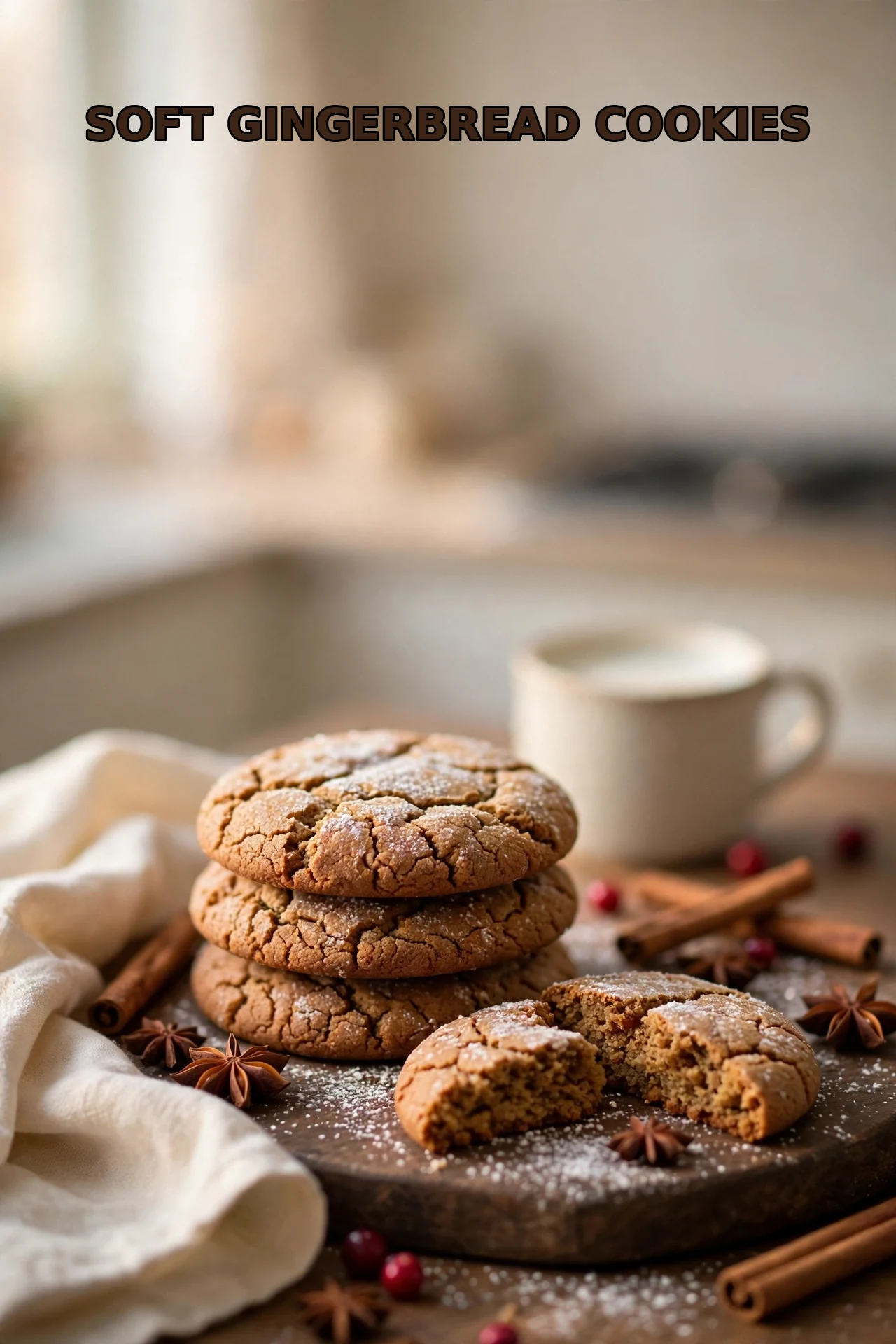
A soft gingerbread cookie recipe is what you want when the spice smells like December but you do not want a cookie that snaps. These are thick, chewy and gently spiced, with a crackly sugar crust and a center that stays tender for days. You need one bowl, six main ingredients plus pantry spices, and about 25 minutes from mixing bowl to warm cookie. There is no chilling, no rolling pin and no cookie cutters involved. Scoop the dough, roll it in sugar, bake it, and you have 24 soft gingerbread cookies that taste like the holidays without turning into a project.
Why This Soft Gingerbread Cookie Recipe Works
Most gingerbread cookie recipes are built for building houses. They are rolled thin, baked hard and designed to hold icing without collapsing. That is a different job. This soft gingerbread cookie recipe is built for eating: a higher ratio of molasses to flour, softened butter instead of cold butter, and a short bake that pulls the tray while the centers still look slightly wet. The result is a cookie with a set edge, a soft middle and a surface that cracks gently as it cools.
Three things do the heavy lifting. Brown sugar keeps the crumb moist because it holds water better than white sugar. Molasses brings both the color and the deep caramel note that people recognize as gingerbread. Baking soda reacts with the acidity in molasses, which helps the cookies lift without turning cakey. Change any one of those and the texture moves. Keep all three and the cookie stays soft for four or five days in a sealed jar.
The dough is also forgiving. It comes together in one bowl with a hand mixer, it does not need a rest in the fridge, and it bakes in under eleven minutes. That makes it a realistic weeknight bake rather than a weekend project.
What You Need: Six Ingredients Plus Spices
The shopping list is short. Everything here is a pantry staple in most kitchens from November to January.
- 2 1/4 cups all purpose flour, about 270 grams
- 1 teaspoon baking soda
- 1/4 teaspoon fine salt
- 1/2 cup unsalted butter, softened to room temperature, 113 grams
- 1/2 cup packed brown sugar, 100 grams
- 1/3 cup unsulphured molasses, 80 milliliters, not blackstrap
- 1 large egg, room temperature
- 1 teaspoon vanilla extract
- 1 tablespoon ground ginger, 1 1/2 teaspoons ground cinnamon, 1/2 teaspoon ground cloves, 1/4 teaspoon ground nutmeg
- 2 tablespoons granulated sugar for rolling, optional
Two notes save bakes. Use unsulphured molasses labelled mild or original. Blackstrap molasses is bitter and will make the cookies taste like medicine. Also make sure the butter is genuinely soft, not melted. Melted butter spreads the dough thin and you lose the thick center that makes these cookies soft.
The Spice Mix That Makes It Taste Like Gingerbread
Gingerbread is a spice blend, not a single spice. The ginger gives the heat, cinnamon gives the warmth, cloves give the background depth and nutmeg rounds the edges. One tablespoon of ground ginger sounds like a lot next to a teaspoon of cinnamon, but that ratio is the difference between a ginger cookie and a gingerbread cookie. If your spices are more than a year old, add an extra half teaspoon of ginger, because ground spices fade quietly.
You can push the blend further if you like. A quarter teaspoon of black pepper adds a slow burn at the back of the throat and is traditional in older recipes. A pinch of cardamom works well with the molasses. Keep the total spice volume around two tablespoons so the dough does not become grainy.
How to Make Soft Gingerbread Cookies, Step by Step
- Heat the oven to 350 degrees Fahrenheit, 175 degrees Celsius, and line two baking sheets with parchment paper. If you only own one sheet, bake in batches and let the sheet cool between them.
- Whisk the flour, baking soda, salt, ginger, cinnamon, cloves and nutmeg in a medium bowl for about twenty seconds. Whisking instead of sifting does the same job and dirties one fewer thing.
- Beat the softened butter and brown sugar in a large bowl for two full minutes, until the mixture looks lighter and slightly fluffy. This step traps air and is the main reason the cookies come out tender rather than dense.
- Beat in the molasses, then the egg, then the vanilla. Scrape the bottom and sides of the bowl once. The mixture will look glossy and smell strong, which is correct.
- Add the dry ingredients in two additions on low speed, mixing only until the last streaks of flour disappear. Overmixing develops gluten and turns soft cookies tough. The dough will be soft, a little sticky and darker than you expect.
- Scoop rounded tablespoons of dough, about 25 grams each, roll them in granulated sugar and place them two inches apart on the prepared sheets. Press each ball flat with the palm of your hand to about half an inch thick, because this dough does not spread much on its own.
- Bake one sheet at a time for 9 to 11 minutes. Pull the tray when the edges are set and the centers still look slightly underdone and puffy. They finish setting on the hot tray.
- Cool on the baking sheet for five minutes, then move the cookies to a wire rack. If you move them while they are hot they will tear. Store them only once they are completely cool.
How Long Does This Soft Gingerbread Cookie Recipe Take?
Start to finish, this soft gingerbread cookie recipe takes about 25 minutes of active time plus 20 minutes of cooling: 10 minutes to gather and measure, 10 minutes to mix and scoop, and 9 to 11 minutes per tray in the oven. Two trays bake back to back in roughly 20 minutes of oven time.
If you are baking for a cookie box or a holiday table, double the batch. The dough doubles cleanly, and the second tray is always faster because the oven is already at temperature and your hands know the motions. A double batch gives you 48 cookies, which covers a family dessert plus a small gift bag without another trip to the store.
How to Keep Gingerbread Cookies Soft for Days
Softness after baking comes down to moisture and storage, not luck. Underbake by one minute rather than overbake by one minute. A cookie pulled at nine minutes with a pale center will still be soft on Thursday. The same cookie left in for twelve minutes is crisp by tomorrow.
Store cooled cookies in an airtight container with a slice of bread or a small piece of apple. The cookie pulls moisture from the bread and stays chewy, and the bread dries out instead. Replace the bread every two days. Keep the container at room temperature, away from the oven and away from direct sun. Do not refrigerate the cookies, because cold air dries them out and the texture turns sandy.
If you want a softer bite the next day, add a teaspoon of corn syrup to the dough. It holds moisture without changing the flavor, and it is the same trick commercial bakeries use.
How to Store and Make Ahead
Baked cookies keep for four to five days at room temperature in a sealed container, and they are at their best on day two, once the spice has settled. For longer storage, freeze baked cookies in a single layer on a tray for an hour, then move them into a freezer bag and press out the air. They keep for three months. Thaw at room temperature for about 30 minutes, still in the bag, so condensation forms on the bag rather than on the cookie.
The dough is the better make ahead option. Roll it into balls, freeze them solid on a tray, then bag them. Bake from frozen at 350 degrees Fahrenheit, adding two minutes to the bake time. That means fresh gingerbread cookies on a random Tuesday with no mixing bowl involved.
Can You Freeze Gingerbread Cookie Dough?
Yes, and it freezes better than most cookie doughs because molasses acts as a natural antifreeze and keeps the dough from drying out. Freeze portioned balls for up to three months. Label the bag with the date and the oven temperature, since a freezer bag in January is a mystery bag in February.
Do not thaw the dough on the counter before baking if you can avoid it. Cold dough holds its shape, and this dough is soft enough that warm dough spreads. Straight from the freezer to the parchment lined sheet is the easiest path.
Decorating Without Losing the Soft Texture
Icing is where soft gingerbread cookies usually go wrong. A thick royal icing layer adds crunch and overwhelms the spice. Instead, dip the tops of cooled cookies in a thin glaze made from powdered sugar and milk, then let them dry on a rack for 20 minutes. The glaze sets to a light shell and keeps the center soft.
Other options that work: a drizzle of melted white chocolate, a dusting of powdered sugar through a small sieve, or a single almond pressed into the center before baking. If you want sugar cookies for decorating with the kids, keep this recipe for eating and use cookie cutters on a firmer dough.
Common Mistakes That Make Gingerbread Cookies Hard
The first mistake is overbaking. Gingerbread dough is dark, so it is hard to read doneness by color. Judge by the edges, not the center, and trust the timer. The second mistake is too much flour. If you scoop flour straight from the bag with the measuring cup, you can pack in an extra quarter cup without noticing. Spoon the flour into the cup and level it with a knife.
The third mistake is cold butter. Cold butter does not cream with sugar, so the dough ends up tight and the cookies bake flat and tough. Let the butter sit out for an hour, or cut it into cubes and give it ten minutes near the warm oven. The fourth mistake is skipping the flattening step. These cookies do not spread enough on their own, so an unflattened ball bakes into a dome with a raw middle.
Finally, do not skip the salt. A quarter teaspoon is small, but without it the molasses tastes flat and the spice reads dull.
What to Serve With Soft Gingerbread Cookies
These cookies belong next to something warm and milky. A mug of hot chocolate, a glass of cold milk, or a cup of black tea with a slice of orange all work. On a holiday table they sit comfortably beside homemade cranberry sauce and a plate of fudgy three ingredient brownies, because the spice cuts through the sweetness of both.
For a cozy night in, serve them after one of these cozy winter dinner recipes. The cookies also crumble well over vanilla ice cream, and a few crushed cookies folded into whipped cream make a fast no bake dessert.
Baking Gingerbread With Kids
This is a good first cookie for children because there is no sharp equipment, no chilling and no delicate rolling. Give them the scooping and the sugar rolling jobs, and keep the oven and the hot tray to yourself. The dough is safe to handle, though it does contain raw egg, so hands should be washed before and after.
For food safety basics on eggs and flour, the USDA safe minimum internal temperature charts are a useful reference for any baking project with children. If you are watching added sugar across the holiday season, this Harvard guide to added sugar in the diet explains where the daily limits sit.
Frequently Asked Questions
Can I make this soft gingerbread cookie recipe without molasses?
You can substitute dark honey or a dark syrup, but the flavor changes and the cookies will be lighter in color and less deep. Molasses is what makes gingerbread taste like gingerbread, so if you only have honey, add an extra half teaspoon of ginger and expect a honey cookie rather than a classic one.
Why did my gingerbread cookies turn out hard?
Almost always overbaking or too much flour. Pull the tray while the centers still look slightly underdone, and measure flour by spooning it into the cup instead of scooping from the bag. A cookie baked to a firm center will be crisp within hours.
Do I need to chill the dough before baking?
No. This dough is designed to bake straight from the bowl, and chilling it makes the butter firm, which slows the spread and can leave a thicker, drier cookie. If you chill it for scheduling reasons, let it sit at room temperature for 20 minutes before scooping.
How many cookies does one batch make?
Twenty four cookies at about 25 grams of dough each on two baking sheets. For a cookie exchange or a gift box, double the batch and bake in four trays, which takes about 45 minutes of oven time total.
Final Notes
Write the bake time on a sticky note the first time you make these, because every oven runs a little hot or cold and the difference between soft and crisp is often ninety seconds. Once you know your oven, this soft gingerbread cookie recipe becomes one of those recipes you make from memory every December, and often in October too.