
This soft brownies recipe is the one I make when the pan has to be empty before the night is over, and it starts with a decision most recipes avoid: the pan comes out of the oven while the center still looks a shade underbaked. A soft brownie is not an underbaked cake, and it is not raw batter either. It is a brownie that sets at the edges, holds together when you lift a square, and stays dense and moist in the middle because the flour never got a chance to develop gluten and the eggs were beaten long enough to trap air.
I baked this soft brownies recipe six times in one week to find the version that works without a stand mixer and without a chocolate stash: butter instead of oil, an 8 inch square pan instead of 9 by 13, and a pull temperature taken with a thermometer instead of the usual toothpick guess. Six of those six pans came out soft in the center and crisp at the corner. What follows is that method, plus the two things that actually control the shiny top, the pan size that changes the texture more than any ingredient, and the exact moment to stop folding.
What Makes a Soft Brownies Recipe Soft in the First Place
Softness in a brownie comes from three ratios, and every one of them is easier to control than most people think. Fat to flour, sugar to flour, and egg to flour. Push fat up and the crumb turns silky. Push sugar up and the crumb stays moist because sugar holds water. Push egg up and the structure turns custardy and soft, until the point where it turns wet and collapses.
This soft brownies recipe sits at 115 grams of butter, 250 grams of sugar and 120 grams of egg to 70 grams of flour. That is a deliberately heavy ratio of fat and sugar to flour, which is why the squares stay tender for three days on the counter. The flour is there to hold the whole thing together, not to build a cake. If you have ever made a brownie that tasted like a flat chocolate cake, the ratio was the problem and not the chocolate.
The second lever is mixing. Gluten needs water and agitation. Cocoa powder is low in the proteins that form gluten and the batter is high in fat, so the window for overworking this soft brownies recipe is narrow, but it is not zero. Fold with a spatula, count your strokes, and stop while you can still see a few dry streaks of flour. Those streaks disappear in the last three folds.
The Ingredients That Matter and the Ones That Do Not
Butter, not oil, for this soft brownies recipe. Butter brings flavor and it also firms up as the brownies cool, which is what gives a soft brownie a sliceable body instead of a greasy one. Oil keeps a brownie soft for longer, but it tastes flat and the texture turns slippery. If you want to hedge, use butter and add one extra yolk.
Use two sugars. Granulated sugar does most of the sweetening and brown sugar adds moisture and a faint caramel note. All white sugar works, and the brownies will be a little crisper at the edge. All brown sugar makes them soft but faintly molasses heavy, which fights the cocoa.
Cocoa powder decides the chocolate flavor, so use Dutch processed cocoa for this soft brownies recipe. It is darker, less acidic, rounder, and it dissolves into the batter with fewer lumps. Natural cocoa is sharper and works fine in a pinch, but you may want an extra tablespoon of sugar. Whichever you use, sift it. Cocoa clumps are the single most common reason a brownie has pale bitter specks inside.
Chocolate does a different job. Melted dark chocolate in the batter adds body and depth, while chopped chocolate folded in at the end gives you pockets that stay molten after the crumb has set. I use 60 to 70 percent dark chocolate for both, and I keep a handful of chunks back to press into the top so the surface looks handmade rather than machine flat.
Salt is not optional. Three quarters of a teaspoon of fine sea salt inside the batter and a pinch of flaky salt on top cuts the sweetness and makes the chocolate taste like more chocolate. Skip the flaky salt if you are serving these to a crowd that dislikes the sweet and salty combination, but keep the salt inside the batter.
Why an 8 Inch Pan Beats a 9 by 13 for This Soft Brownies Recipe
The same batter in a bigger pan bakes into a thin, drier, cakier square, because the batter spreads out, heats faster and loses moisture before the center ever sets. An 8 inch square pan gives a thickness of about 3.5 centimeters, which is exactly where a soft brownie wants to live. A 9 inch square pan works if you shave 3 minutes off the bake and accept a slightly firmer bite.
Line the pan with parchment, leaving an overhang on two opposite sides. This is not a presentation detail. A cold brownie lifted out with the parchment cuts cleanly with one stroke, and a clean cut is half of what makes a soft brownie look soft. Metal pans conduct heat more evenly than glass here. If glass is all you have, drop the oven temperature by 25 degrees Fahrenheit and add 4 minutes.
How the Shiny Crackly Top Actually Happens
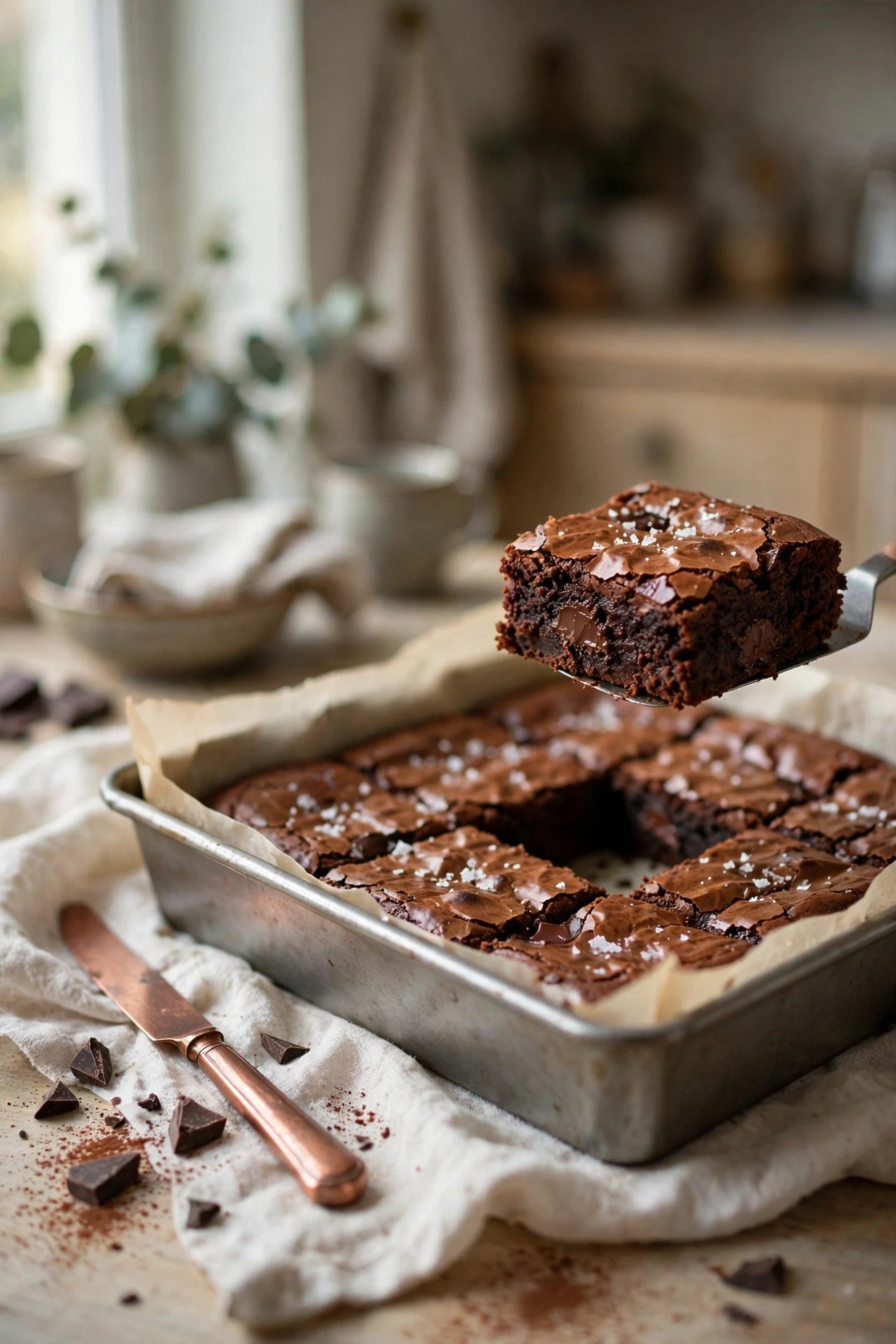
The shiny top is a thin layer of dissolved sugar that dries on the surface. It forms when sugar is fully dissolved in the egg and butter mixture, and when the surface of the batter stays wet long enough for that sugar layer to set before the interior sets. Two steps get you there, and neither one is a trick.
First, whisk the eggs and sugar into the warm butter and chocolate mixture for a full two minutes. Warm batter dissolves sugar faster, and the whisking turns the mixture pale and slightly thick, which is the sign that the sugar has gone into solution. Second, do not open the oven in the first 18 minutes. A draft drops the surface temperature and the sugar layer sets unevenly, which is why a brownie comes out with a matte top and a ragged crack pattern.
That is the whole secret behind the top on this soft brownies recipe. No boiling water, no bread flour, no 24 hour rest. Warm batter, dissolved sugar, steady oven, and a batter that goes in within ten minutes of mixing.
Step by Step: Baking This Soft Brownies Recipe
Heat the oven to 350 degrees Fahrenheit, or 175 Celsius, with a rack in the middle. Line an 8 inch square pan with parchment and leave a two inch overhang on two sides. Melt 115 grams of butter with 100 grams of chopped dark chocolate over low heat, stirring until smooth, then take it off the heat and let it sit for five minutes so it stops steaming.
Whisk 200 grams of granulated sugar and 50 grams of packed light brown sugar into the warm chocolate mixture until the grains start to disappear, about one minute. Add two whole eggs one at a time, then one extra yolk and two teaspoons of vanilla, and whisk hard for two minutes. The mixture should look glossy, paler than it started and thick enough to leave a short ribbon when you lift the whisk.
Sift 60 grams of Dutch cocoa, 70 grams of all purpose flour, three quarters of a teaspoon of salt and half a teaspoon of espresso powder directly over the bowl. Fold with a silicone spatula, scraping the bottom, twenty to twenty four times, until the last dry streaks vanish. Fold in 60 grams of chocolate chunks in three turns. Stop. Extra folding now costs you the soft center you wanted.
Spread the batter into the pan and level it with the back of a spoon, then press the reserved chunks into the surface and add a pinch of flaky salt. Bake for 22 to 26 minutes. The edges should look set and slightly puffed, the center should still have a faint shine, and an instant read thermometer pushed into the middle should read 200 to 205 degrees Fahrenheit. A toothpick comes out with thick moist crumbs, not clean batter and not a clean crumb.
Cool the pan on a rack for two hours before you cut. This is the hardest instruction in this soft brownies recipe and the one that decides whether your first square holds together. Warm brownies tear. A brownie at room temperature cuts into a clean rectangle with a glossy interior.
How to Tell When a Soft Brownie Is Done Without Guessing
Timing alone is unreliable because every oven runs hot or cold and every pan conducts differently. Use two signals together. The visual one is a set edge that has pulled a millimeter away from the parchment and a center that still moves as one piece when you nudge the pan. The measured one is an internal temperature of 200 to 205 degrees Fahrenheit at the center.
If you pull the pan at 190 degrees the center will be fudgy and slightly loose once cool, which is delicious and impossible to stack. If you leave it to 215 degrees the brownie turns dry and crumbly at the edges within a day. The window is narrow, roughly ninety seconds, so stay in the kitchen for the last five minutes of this soft brownies recipe.
Cooling and Cutting This Soft Brownies Recipe Cleanly
Cool this soft brownies recipe in the pan, not on a plate. A brownie that cools out of the pan loses its shape before the crumb has finished setting. After two hours, lift the whole slab out with the parchment, set it on a board and cut with a long knife that has been run under hot water and wiped dry. Press straight down, do not saw, and wipe the blade between cuts. Sixteen squares from an 8 inch pan, or nine generous ones if you would rather not share.
Storing and Freezing a Soft Brownies Recipe
Keep the squares of this soft brownies recipe in a sealed container at room temperature for up to three days, with a sheet of parchment between layers so the tops do not stick. Do not refrigerate them, because cold makes the cocoa butter firm and the crumb gritty. If your kitchen is above 27 Celsius, refrigerate and bring the brownie back to room temperature for twenty minutes before eating.
For longer storage, wrap the whole cooled slab tightly in plastic and then foil and freeze for up to three months. Thaw overnight in the fridge, then unwrap and sit at room temperature for one hour. Individual squares freeze well too, and a frozen square is a reasonable thing to eat standing in front of the freezer, though a twenty second blast in the microwave brings the center back to molten.
Baked goods with eggs are a food safety question and the FDA guidance for egg dishes is simple: refrigerate anything containing cooked egg within two hours, keep the fridge at 40 degrees Fahrenheit or below, and use refrigerated leftovers within three to four days. Since this soft brownies recipe contains three eggs, treat the three day counter window as a quality limit and the four day fridge window as the safety limit.
Five Variations on This Soft Brownies Recipe That Still Stay Soft
Add a teaspoon of instant espresso to this soft brownies recipe for a darker chocolate flavor that does not taste like coffee. Swirl in three tablespoons of salted peanut butter after the batter is in the pan, using a knife, and keep the swirls shallow so the top still sets shiny. Swap 30 grams of the flour for rye flour for a faint malty note that pairs well with dark chocolate.
Fold in 80 grams of toasted walnuts or pecans, but toast them first and cool them completely, because warm nuts steam and soften the crumb around them. For a brownie that tastes like a candy bar, press a layer of soft caramel into the surface before baking and add two minutes to the bake time.
To make this soft brownies recipe gluten free, replace the all purpose flour with a one to one gluten free blend that contains xanthan gum and add one tablespoon of milk. The result is slightly fudgier, so pull the pan at 200 degrees and let it cool fully before cutting.
Common Mistakes That Turn a Soft Brownies Recipe Into Cake
The first mistake with any soft brownies recipe is cold eggs. Cold eggs seize the warm butter mixture and the sugar never fully dissolves, which costs you the shiny top. Leave the eggs on the counter for thirty minutes, or put them in warm water for five minutes.
The second is overmixing after the flour goes in. Every extra ten strokes builds structure, and structure is the opposite of what this soft brownies recipe is trying to do. The third is cutting too early. The fourth is a pan that is too large, which bakes the batter thin and starts the drying process before the center sets.
The fifth, and the one I see most often, is using a chocolate with a low cocoa percentage and then wondering why the brownie tastes sweet and flat. Sixty to seventy percent is the range where a brownie tastes like chocolate instead of sugar.
Frequently Asked Questions About This Soft Brownies Recipe
Why are my brownies cakey instead of soft?
Cakey brownies come from too much flour, too much mixing, or a pan that is too big. Check the flour weight first. A half cup of flour scooped from the bag can weigh 80 grams instead of 70, and that extra 10 grams is enough to turn a soft brownie into a cake square. Weigh the flour, fold only until the streaks disappear, and use an 8 inch pan.
Can I make this soft brownies recipe without a thermometer?
Yes, but use two visual cues instead of one. Look for edges that are set and slightly pulled away from the parchment, and a center that still looks moist and moves as a single piece when you shake the pan gently. A toothpick inserted two centimeters from the center should come out with thick crumbs, never with wet batter.
How do I get the crackly shiny top every time?
Whisk the eggs and sugar into the warm butter and chocolate mixture for two full minutes so the sugar dissolves, put the batter in the oven within ten minutes of mixing, and do not open the oven door during the first 18 minutes. Those three habits are what produce the thin glossy layer on top of this soft brownies recipe.
Can I double this soft brownies recipe for a 9 by 13 pan?
Yes, double every ingredient and bake in a parchment lined 9 by 13 pan for 28 to 33 minutes, checking at 28. The brownies will be slightly less tall and slightly firmer than the 8 inch version, so pull them at 200 degrees internally and cool for two hours before cutting. For a crowd, this is the version I make.
One More Thing Before You Bake
Every soft brownie I have been proud of came out of a pan I nearly pulled too early, and every one I regretted stayed in two minutes longer. Set a timer for the low end of the range, take the temperature, and trust the reading over the clock. Once you have made this soft brownies recipe twice, you will know your own oven well enough to stop measuring altogether.
If you like this method, the same base batter becomes a decorated mummy brownie tray with a few minutes of piping, and the leftover chocolate pairs well with no bake graveyard dirt cups on the same dessert table. For a caramel dessert that uses the same brown butter habit, try these salted caramel apple bars, and for a drink to serve alongside, this slow cooker hot chocolate keeps the oven free.
Two references shaped the safety and sugar notes in this post. The FDA egg safety guidance explains why dishes with cooked egg belong in the fridge within two hours and why 160 degrees Fahrenheit matters for egg dishes, and the NHS sugar guidance is the source for the 30 gram daily free sugar figure mentioned above. Both are worth reading once if you bake for other people.