
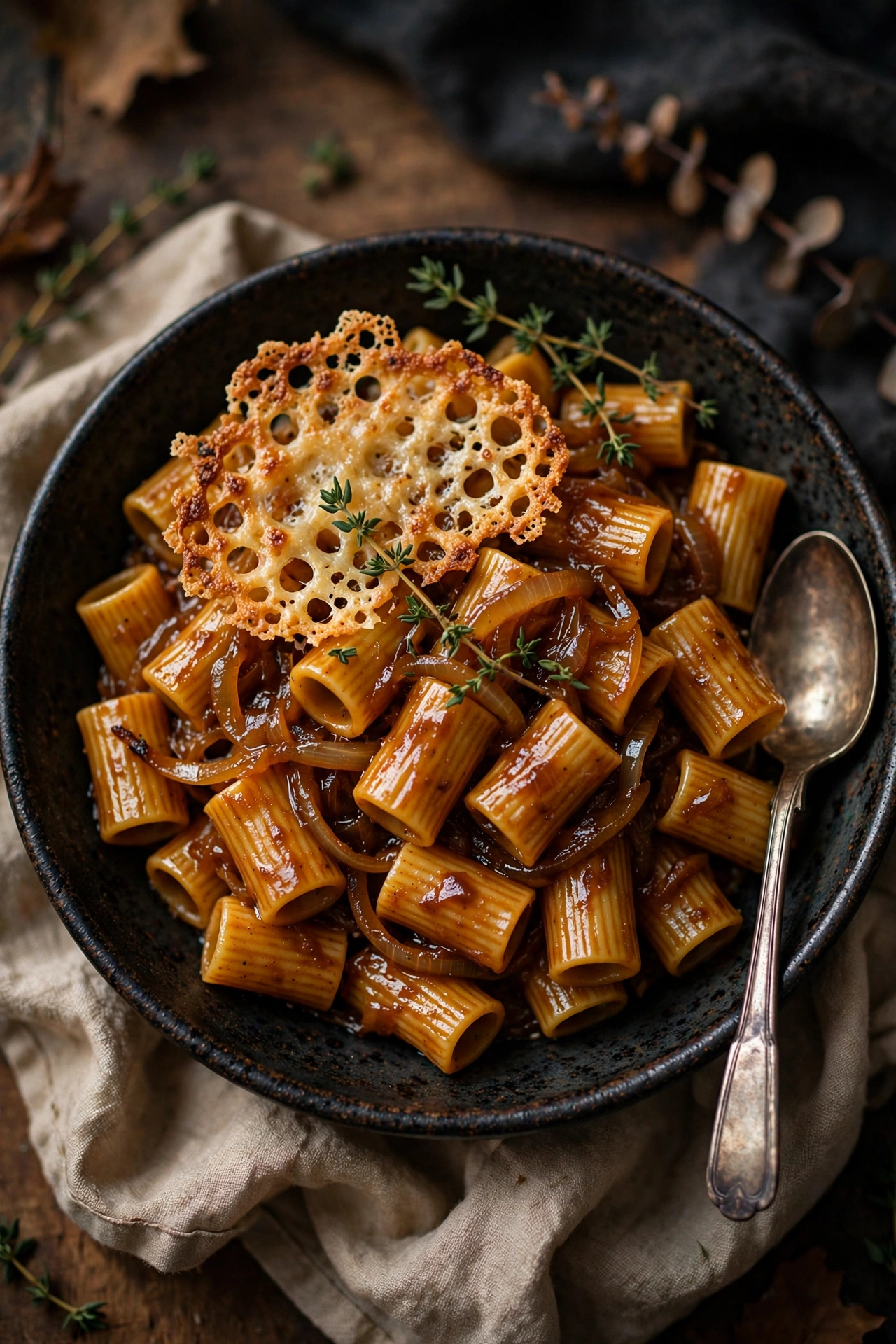
French onion pasta takes everything you love about a steaming bowl of French onion soup, the deep, jammy caramelized onions, the savory broth, the melty cheese, and turns it into a hearty one-pot pasta dinner. The rigatoni cooks right in the broth, so every single bite soaks up that rich, umami-packed flavor instead of a thin sauce that sits on top.
My version keeps the ingredient list short but adds a few touches that make it taste like it simmered all day: a knob of browned butter to get the onions going, a splash of sherry vinegar to lift their sweetness, and a lacy Gruyère crisp shattered over the top instead of the usual soggy bread. It is cozy, cheesy, and on the table in about 40 minutes with one pot to wash.
If you already love cozy pasta nights, this one-pot french onion pasta will earn a permanent spot in your rotation. Once you see how hands-off the onions really are, you will want to make it on repeat all through the fall.
One thing I love about french onion pasta is how forgiving it is. If your onions are not quite as dark as you want, keep going a few more minutes. The deeper the color, the deeper the flavor in the finished french onion pasta.
Why You Will Love This French Onion Pasta
The best part of this recipe is that the pasta never gets drained. It simmers directly in the broth, and as it cooks the noodles release their starch straight into the liquid. That starch is what thickens the sauce into something silky that clings to every piece of rigatoni, which means no cornstarch, no roux, and no extra pot.
It also happens to be one of the most forgiving dinners you can make. The onions can be cooked ahead, the sauce comes together in a single skillet, and the finished dish reheats beautifully the next day. Serve it with a crisp green salad and you have a complete, company-worthy meal without any last-minute stress.
What Makes This Version Different
Most french onion pasta recipes start the onions in plain olive oil and finish with a slice of toasted bread under the broiler. I do two things differently, and both of them change the whole character of the dish.
First, I start the onions in browned butter. Toasting the milk solids before the onions go in adds a warm, nutty bass note that plain butter or oil simply cannot give you. Second, I finish with a thin, lacy Gruyère crisp made in a dry skillet and shattered over the bowl like edible glass. You still get that classic cheese-pull, but with a delicate crunch instead of a heavy crouton soaking up the sauce.
How to Caramelize Onions Faster Without Losing Flavor
True caramelized onions can take well over an hour, and on a weeknight that is simply not happening. The trick is to get them soft and deeply browned in about 25 minutes, then use a splash of liquid to help them relax into that jammy texture.
Slice the onions thinly and evenly so they cook at the same rate, give them a good pinch of salt right away to draw out moisture, and keep the heat at medium rather than high. When they are golden, add the sherry vinegar and let it bubble away, the steam loosens all the browned bits from the bottom of the pan, and those bits are pure flavor. If the pan ever looks dry, a spoonful of water is all you need; never let the onions fry.
Make It Your Own
This dish is a wonderful canvas. Stir in a handful of baby spinach at the very end for color, add sliced mushrooms with the onions for extra depth, or swap the rigatoni for orecchiette or medium shells if that is what you have in the pantry. A pinch of red pepper flakes with the garlic gives it a gentle warmth, and a squeeze of lemon at the end brightens everything back up if the sauce tastes too heavy.
For a vegetarian version, use vegetable broth and skip the Worcestershire sauce, a teaspoon of soy sauce or tamari brings back that savory depth without any meat. If you want it even heartier, leftover shredded chicken or a few seared sausage coins stirred in at the end turn it into a full meal.
Tips for the Creamiest Sauce
Add the cheese a handful at a time and stir until each addition disappears before adding the next. Dumping it all in at once makes it clump, and once Gruyère clumps it is very hard to smooth out. Keep the heat low when the cream and cheese go in, because boiling cream can break and turn grainy.
Let the pasta rest for five minutes off the heat before serving. It keeps absorbing liquid as it sits, so that short rest is what gives you a glossy, coating sauce rather than a soupy one. If it tightens up too much, loosen it with a splash of warm broth.
How to Store and Reheat Leftovers
Leftovers keep well in an airtight container in the refrigerator for up to three days. The pasta will soak up the sauce as it chills, so reheat it gently on the stovetop or in the microwave with a spoonful of broth or water stirred in to bring it back to its silky consistency. Following these safe cooling and reheating guidelines from University of Minnesota Extension will help you store it confidently.
If you enjoy this style of cooking, you might also like our one-pot broccoli cheddar soup for another cozy bowl, our creamy white chicken chili when you want something warming and hearty, and our apple cider chicken thighs for a skillet dinner with real fall flavor.
Serve this french onion pasta with a crisp green salad or a slice of crusty bread to soak up the last of the sauce. It is the kind of cozy french onion pasta dinner that makes a chilly weeknight feel special.
If you are new to french onion pasta, start with the onion step and take your time. That is the heart of a great french onion pasta, and the rest comes together quickly.
Frequently Asked Questions
Can I make french onion pasta without wine?
Yes. Replace the dry white wine with two tablespoons of white wine vinegar or a splash of extra broth plus a teaspoon of balsamic vinegar. You still get the acidity that balances the sweet onions, and the dish tastes just as rich.
What pasta shape works best for this recipe?
Short, ridged shapes are ideal because they trap the sauce. Mezzi rigatoni, regular rigatoni, orecchiette, and medium shells all work beautifully. Long noodles like spaghetti are harder to toss evenly in a skillet, so save those for another night.
Why did my sauce turn out grainy?
Grainy sauce almost always means the dairy got too hot. Add the cream and Gruyère off the heat or over the lowest setting, and stir the cheese in a handful at a time. Once it melts smoothly, keep the pan below a simmer and serve right away.
Can I caramelize the onions ahead of time?
Absolutely, and it is a great way to get dinner on the table fast. Cook the onions up to three days in advance, cool them completely, and refrigerate them in a covered container. When you are ready to cook, warm them in the skillet and continue with the recipe from the garlic step.