
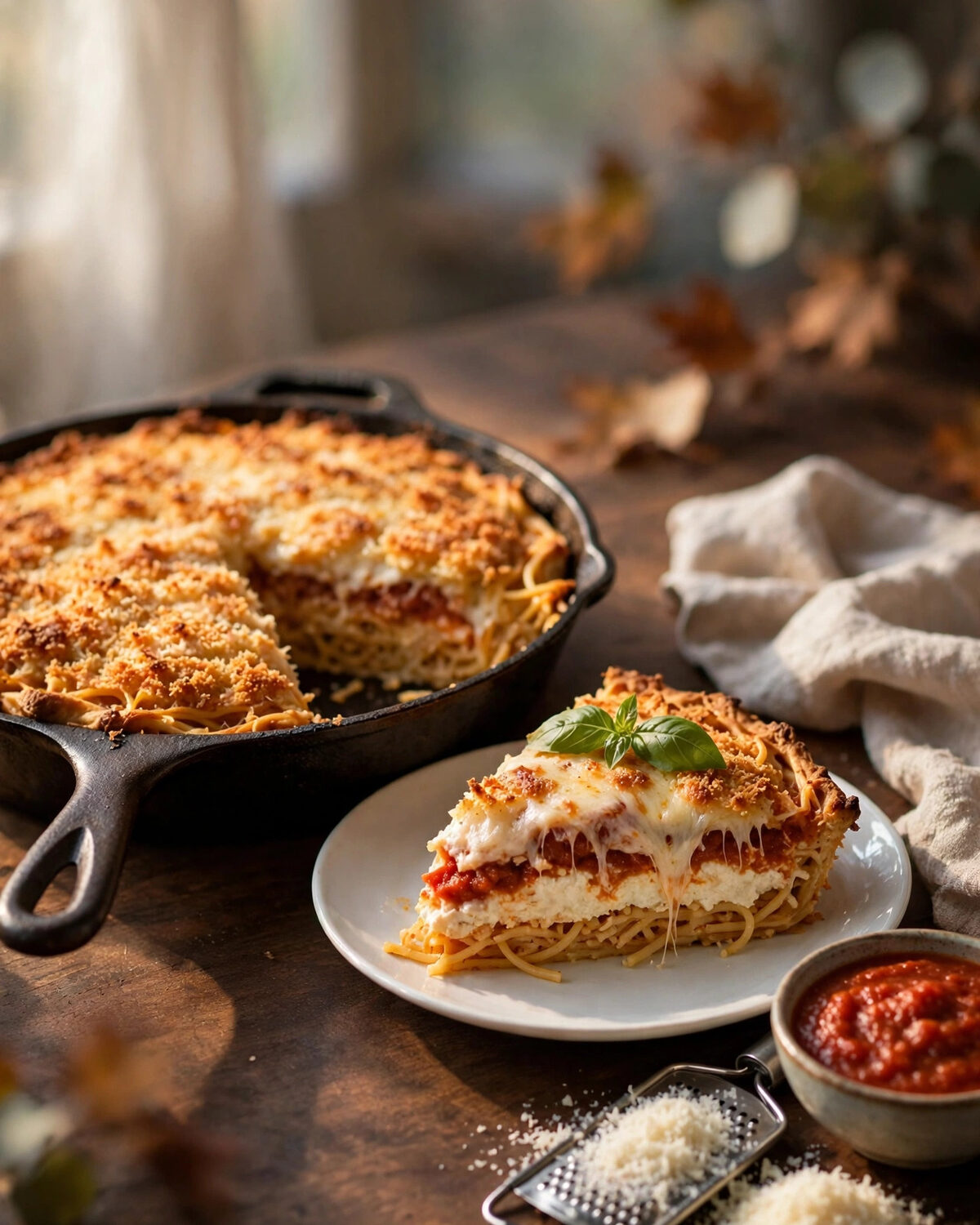
Spaghetti night and lasagna night do not have to be two separate evenings. A baked spaghetti pie takes the noodles everyone already loves, packs them into a skillet with a whipped ricotta center and a serious cheese lid, and slices like a cake. It looks like a weekend project and takes about the same effort as a pot of sauce.
The trick to a baked spaghetti pie that actually holds its shape is not more cheese, it is the order of operations. The pasta gets tossed in brown butter and parmesan so every strand is slick and coated, the ricotta gets whipped so it spreads instead of clumping, and the top gets a panko and parmesan lid that crisps in the oven instead of turning rubbery. Follow that order and your baked spaghetti pie cuts clean after ten minutes of resting.
Why This Baked Spaghetti Pie Holds Its Shape
A loose pile of spaghetti and sauce will always collapse when you cut it. Three small decisions change that. First, the strands are coated in fat and finely grated parmesan before they ever meet an egg, so they slide past each other and then lock together. Second, two eggs go into the pasta itself as a binder, not into the ricotta alone. Third, the pie is packed down firmly in the skillet, which removes the air pockets that make a baked spaghetti pie crumble at the first slice.
That is also why this dish is more forgiving than lasagna. There are no sheets to overlap, no corners to burn, and nothing to boil in a giant pot. A ten inch cast iron skillet gives the baked spaghetti pie a crisp edge all the way around, and the same pan goes from stove to oven to table.
Cook the Spaghetti Only a Third of the Way
This is the step most baked pasta recipes get wrong. If you boil the spaghetti until it is done, it spends another thirty five minutes in the oven absorbing sauce and turns to mush. The University of Wyoming Extension puts it plainly: for baked dishes, pasta should be boiled until just flexible but still quite firm, roughly a third of the suggested cooking time. The pasta finishes cooking in the oven, in the sauce, which is exactly where you want it to pick up flavor.
Two more details from the same guidance worth keeping: use plenty of water so the strands never clump, and never rinse spaghetti destined for a baked spaghetti pie. The surface starch is what helps the sauce and the egg binder cling to the noodles.
The Brown Butter and Parmesan Toss
Melt four tablespoons of butter in the skillet over medium heat until it smells nutty and the milk solids turn the color of hazelnuts. Pull it off the heat, add the drained spaghetti, a half cup of finely grated parmesan, and a good pinch of black pepper, and toss until every strand looks glossy. This is the layer that gives a baked spaghetti pie its deep toasted flavor, and it is the reason the noodles stay separate instead of turning into a solid block.
Whipped Ricotta, Not Just Mozzarella
Most versions are all mozzarella, which is why they taste flat. Whip a cup and a half of whole milk ricotta with one egg, lemon zest, and salt for about a minute, until it looks like soft frosting. Spread that over the pasta and you get a creamy middle layer that tastes bright instead of heavy. The mozzarella still goes on, but it belongs on top where it can brown.
Layering the Baked Spaghetti Pie in the Skillet
Press half the coated spaghetti into the skillet in an even layer, then spread the whipped ricotta over it, leaving a one inch border so the edges stay crisp. Add the rest of the spaghetti and press again with the back of a spatula. Spoon marinara over the top, scatter the mozzarella, and finish with the panko mixture. Pressing matters: an airy pile will not slice, and a baked spaghetti pie that has been compacted will.
The Panko Parmesan Crust That Makes It
Toss half a cup of panko with a third of a cup of parmesan and a tablespoon of olive oil, then scatter it over the cheese. Panko browns faster and stays crunchier than regular breadcrumbs, and mixed with parmesan it forms a lid you can hear when you cut through it. Bake at 400F for about thirty minutes, until the edges bubble and the top is deep golden.
Rest It Before You Slice
Ten minutes on the counter, no exceptions. The cheese sets, the layers settle, and the slices hold. Cutting into a baked spaghetti pie straight from the oven gives you a puddle on the plate and cheese strings everywhere. If you need to keep it warm, tent foil loosely over the skillet rather than covering it tightly, which would steam the crust soft.
Make Ahead, Storage, and Reheating
Assemble the baked spaghetti pie up to a day ahead, cover, and refrigerate without the panko topping. Add the topping right before baking and give it an extra five minutes in the oven. Leftovers keep three days in the fridge. Reheat slices in a skillet over medium low heat for four minutes a side, or in a 350F oven for twelve minutes. The microwave works in a hurry, but the crust will give up its crunch.
Variations and What to Serve With Baked Spaghetti Pie
Swap the marinara for a meat sauce or a spicy vodka sauce, stir crumbled sausage into the pasta layer, or fold roasted mushrooms and spinach into the ricotta. For a lighter version, use part skim mozzarella and skip the parmesan in the toss. Serve this baked spaghetti pie with a sharp green salad and garlic bread to mop the pan, or start with whipped feta dip with hot honey while the oven works.
For more pasta night ideas, try brown butter spaghetti with crispy prosciutto, this creamy chicken and mushroom pasta, or a pot of creamy sausage tortellini soup on a colder night. Any of them pairs well with a simple crockpot potato soup starter if you are feeding a crowd.
Frequently Asked Questions
Why did my baked spaghetti pie fall apart when I sliced it?
Almost always because it was cut too soon or packed too loosely. A baked spaghetti pie needs the pasta pressed firmly into the skillet and ten minutes of resting after it comes out of the oven so the cheese and egg can set. Cutting straight from the oven gives you a loose pile instead of a slice.
Can I make baked spaghetti pie ahead of time?
Yes. Assemble it up to twenty four hours ahead, cover and refrigerate it without the panko topping, then add the topping right before baking and give it about five extra minutes in the oven. You can also bake it fully, cool it, and reheat slices in a skillet or a 350F oven.
What pasta shape works best for baked spaghetti pie?
Spaghetti is traditional, but bucatini, linguine, or even penne work. Longer strands give you the classic sliceable layers. Whatever you choose, boil it only about a third of the package time so it can finish cooking in the oven without going soft.
How many calories are in a serving of baked spaghetti pie?
This recipe comes out to about 520 calories per serving when cut into six slices, with roughly 26 grams of protein. Lighter swaps like part skim mozzarella and less parmesan bring it down, and using a lean meat sauce raises the protein.